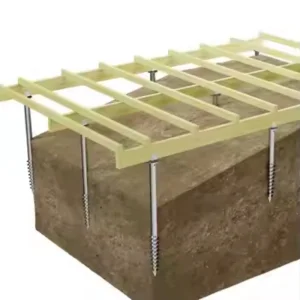
Explore our leading solar structures, smart combiner boxes, and mechanical foundation hardware built to facilitate optimal energy monitoring and structural support.
Understanding the intersection of structural engineering, real-time sensing, and intelligent edge analytics in utility-scale PV assets.
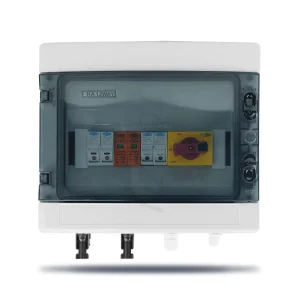
By integrating micro-sensors directly within brackets and combiner boxes, plant operators receive telemetry on structural tilt, mechanical load, and PV module efficiency down to the string level.
Self-adjusting algorithm systems track celestial movement while receiving local wind speed and mechanical stress signals, preventing catastrophic uplift failures during extreme storms.
Utilizing high-frequency electrical sampling in the PV combiner box to discover micro-cracks, dust build-up, and PID (Potential Induced Degradation) early, cutting operational maintenance costs by up to 30%.
Historically, solar monitoring was restricted to basic energy-yield meters. Today's modern installations treat the physical support infrastructure and the electrical energy output as one interconnected digital ecosystem. As utility-scale PV installations expand into complex terrains—such as mountainous slopes, coastal zones prone to high corrosion, and agricultural lands—understanding structural dynamics is critical.
Key technological shifts on our roadmap include integrating tilt sensors into mounting rails, utilizing acoustic signature analysis to detect loose structural hardware, and sending data to centralized cloud SCADA systems. By choosing Hebei Trope Solar, our partners gain structural support products engineered to interface with modern sensor brackets, cable organization pathways, and intelligent combiner box setups, allowing for direct structural telemetry implementation.
Optimizing mechanical stability and sensor integration across various structural mounting types.
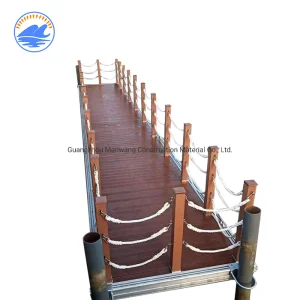
Floating solar setups require continuous tracking of water surface waves, anchor wind load, and moisture. Our floating platform solutions utilize specialized high-density polymer and stainless steel structures, offering optimized bracket channels for moisture sensors, temperature probes, and environmental monitoring devices.
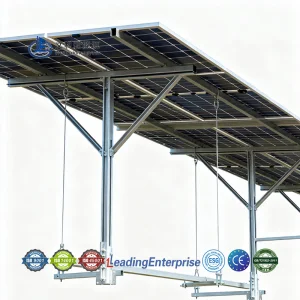
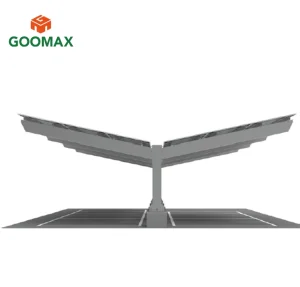
Agri-PV and solar carports present challenges in load distribution and spatial design. Our modular solar structures for carports integrate internal cable channels, preventing physical cable wear while providing built-in mounting zones for combiner box integrations, fire-safety switches, and EV charging interfaces.
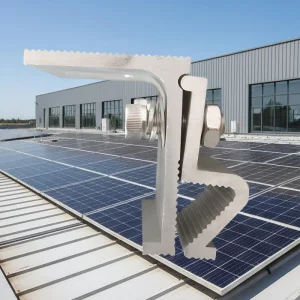
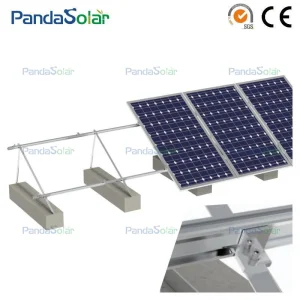
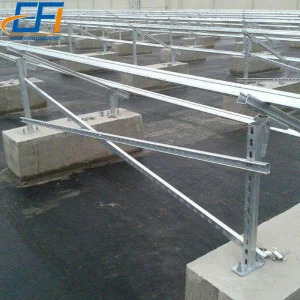
Flat roofs require minimizing structural penetration while maintaining optimal wind shear profiles. Our ballasted triangle roof mounting systems combine pre-engineered wind deflectors with designated areas for structural strain gauges, keeping the installation safe without compromising roof water protection layers.
Ensuring dimensional accuracy and structural reliability through high-capacity automated production.
Hebei Trope Solar Co., Ltd. operates two production facilities in Hebei ShijingChangTian and Xingtai ChangTian, spanning 25,000 square meters. These plants utilize Factory 4.0 principles, employing cold-forming rolling lines, automated robotic welding, and automated punching presses. These technologies keep tolerances within tight limits, allowing for smooth physical installation on-site.
Our raw material supply chain relies on partnerships with premium domestic steel mills. This guarantees consistent physical properties in our steel coils, hot-rolled shapes, and aluminum alloys. Below is an overview of our quality control parameters for structural systems:
Combining structural expertise and modern manufacturing to deliver durable solar support systems.
Hebei Trope Solar Co., Ltd. is a leading manufacturer specializing in the research, development, design, production, and sales of photovoltaic support systems and related accessories. We provide comprehensive, end-to-end supply chain solutions for solar energy projects, ensuring optimal support and performance for photovoltaic systems.
With two state-of-the-art production facilities in Hebei ShijingChangTian and Xingtai ChangTian, covering a combined area of 25,000 square meters, our company is equipped with a range of advanced automated production lines. Our product portfolio includes photovoltaic brackets, piles, braces, hot-dip galvanized bolts, anchor bolts, and other essential components for solar installations.
At Hebei Trope Solar Co., Ltd., we are committed to shaping a new standard in the photovoltaic support industry. Our mission is to provide customers with the highest-quality solar support systems and efficient bolt procurement solutions. Leveraging strong technical expertise, cutting-edge production equipment, and a rigorous self-inspection system, we have laid a solid foundation for sustainable growth and long-term success.
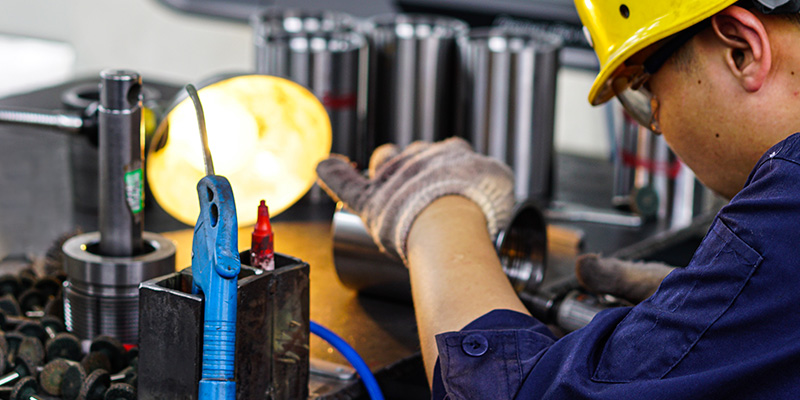
We are driven by a commitment to excellence, integrity, and innovation. Through continuous improvement and a focus on product quality, we ensure that our solutions meet the most demanding industry standards. Our team adheres to strict quality control measures at every stage of production, from raw material selection to final inspection, ensuring the reliability and durability of our products in all environments.
In addition to serving the domestic market, Hebei Trope Solar Co., Ltd. is dedicated to expanding our reach globally, providing world-class solar support products to international clients. Our customer-first philosophy, coupled with our expertise in photovoltaic solutions, makes us a trusted partner for solar power developers and installers worldwide.
We are passionate about the future of renewable energy and are proud to contribute to the global transition to sustainable solar power through our innovative products and services.
Engineering components to meet rigorous structural regulations and environmental standards globally.
For EPC contractors, solar project developers, and institutional investors, procurement decisions rely on compliance with regional structural codes. Wind speeds, seismic activity, and soil bearing capacity vary globally, necessitating precise calculations for structural mounting systems.
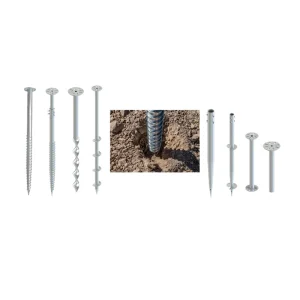
At Hebei Trope Solar, our design engineers conduct detailed Finite Element Analysis (FEA) to confirm that all ground screw piles, ballasted structures, and roof clamps meet strict standards, including:
Furthermore, our hot-dip galvanized parts undergo salt-spray and mechanical testing to guarantee they withstand harsh coastal, high-humidity, and industrial environments without premature rust or mechanical wear.
Addressing common technical questions regarding solar mounting design, compliance, and telemetry integration.
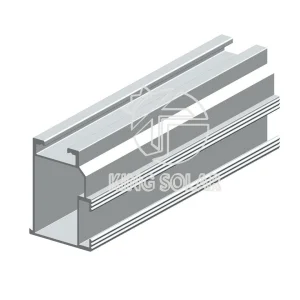
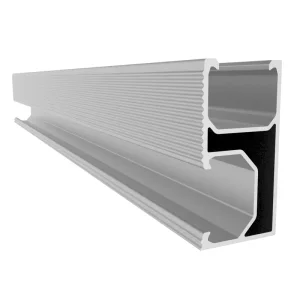
Our structural profiles feature built-in wire routing channels, pre-punched holes, and brackets designed to mount telemetry sensors, weather stations, and tracker controllers. This setup allows developers to run sensor cables safely through the racking, shielding them from UV exposure and physical wear.
We use Q235B and Q355B steel finished with a hot-dip galvanized layer (average thickness ≥ 85 μm) complying with ISO 1461. For aluminum components, we use AL6005-T5 with an anodized layer (≥ 15 μm), which prevents galvanic corrosion when in contact with stainless steel fasteners.
Yes, our engineering team designs tracker-compatible torque tubes and high-clearance tracking frames. This design minimizes rear-side shading, allowing bifacial panels to capture albedo light effectively and maximize overall energy yield.
Our quality control team performs multi-point inspections, checking raw material chemical composition, steel tensile strength, dimensional tolerances, weld integrity (ultrasonic testing for critical joints), and hot-dip galvanizing thickness. This process helps ensure all components arrive ready for installation.
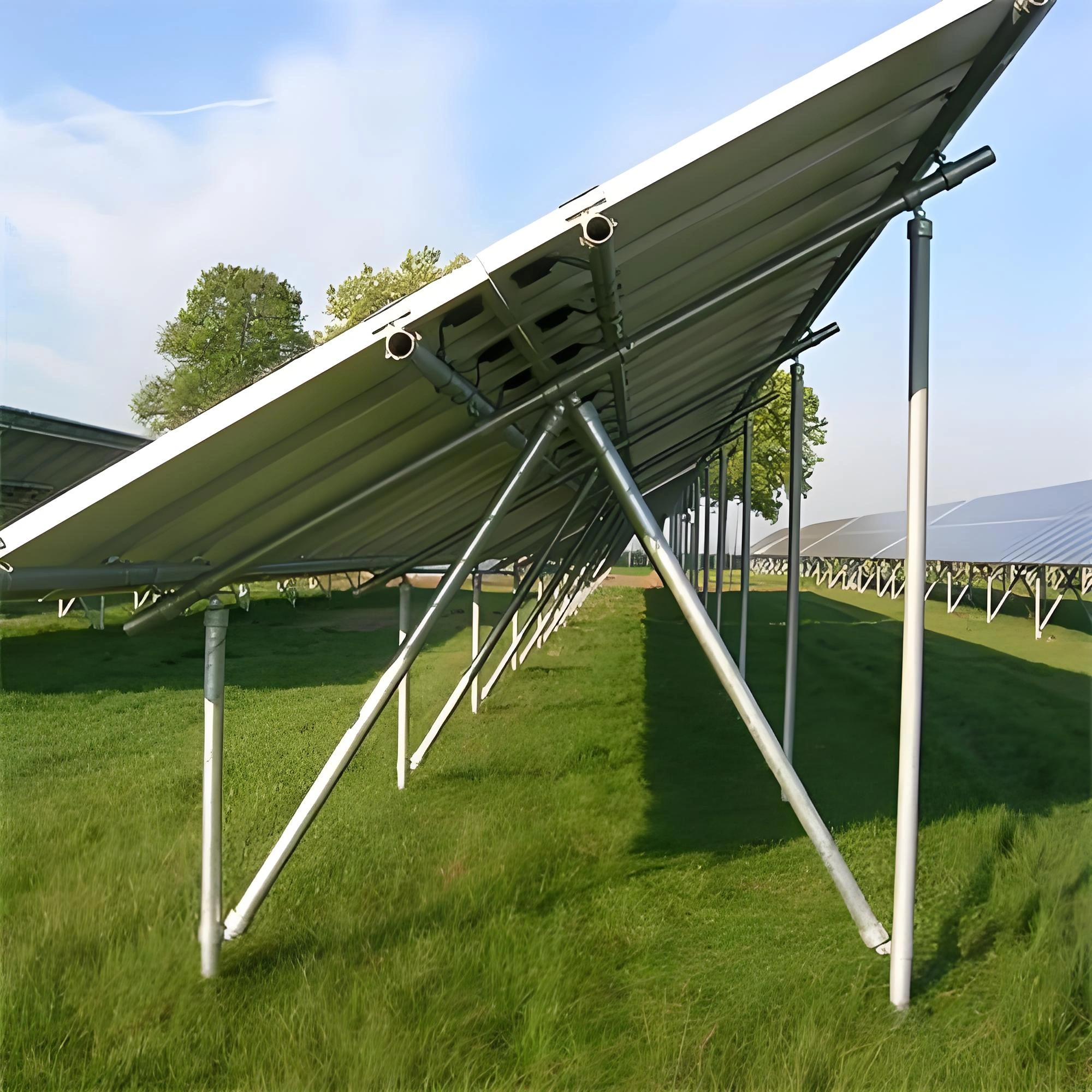
Designed for quick installation, reliable ground connection, and stability under heavy wind loads.
 Trope Solar