Can I use aluminum rails with steel brackets? Yes, in many assemblies, but compatibility depends on load, exposure, and connection details. This pairing appears in solar arrays, racks, and outdoor frames because aluminum rails are light, while steel brackets can provide sturdy support. The metals do not automatically make a safe connection. Check the rail profile, bracket rating, fastener size, and required torque against manufacturer instructions. Small mismatches matter.
Moisture creates another concern. When aluminum and steel touch in wet or salty conditions, galvanic corrosion may develop, especially if coatings are damaged. A compatible isolation pad, sleeve, or washer can reduce direct contact, but it must not weaken the joint or trap water. Use corrosion-resistant fasteners suited to the environment, and avoid mixing parts based only on appearance. Inspect cut edges, damaged coatings, and signs of white or reddish corrosion during maintenance. In a sheltered, dry installation, the risk may be lower; coastal exposure changes the calculation. Thermal expansion also differs, so long rails may need movement allowances specified by the system designer. There is no universal detail that fits every assembly. Confirm expected loads, spacing, and site conditions with product documentation or a qualified engineer, particularly for overhead or structural installations. I would not rely on a tight fit alone. That is easy to overlook.
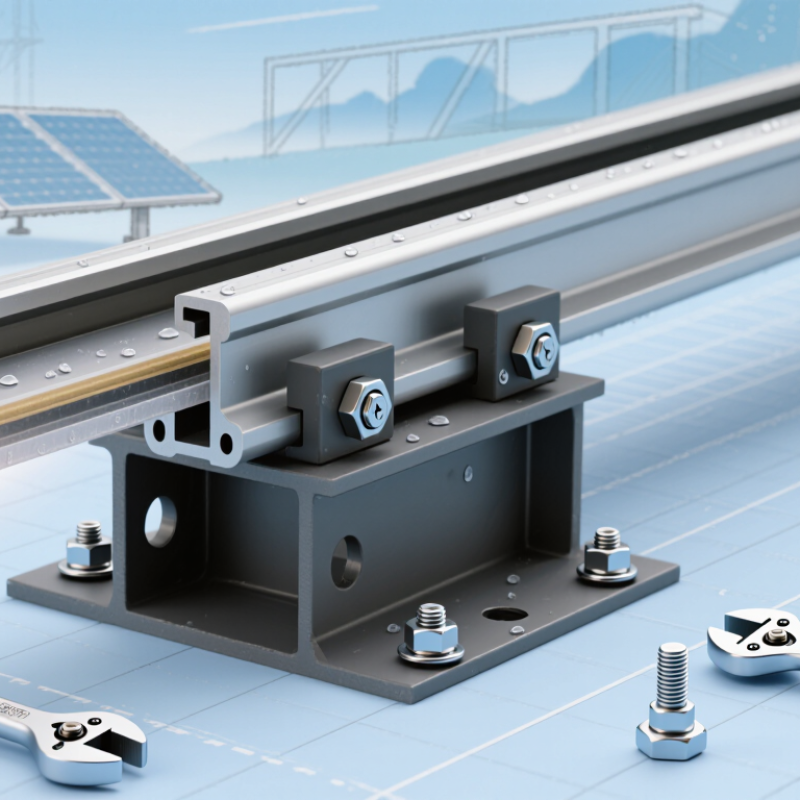
Aluminum rails are valued for their low weight and resistance to rust, making them easier to handle and useful in many outdoor installations. Steel brackets, by contrast, often provide strong support in a compact shape. Together, they can create a practical assembly without making the rail unnecessarily heavy. A short rail may feel rigid on its own, but its bracket spacing still affects how much it flexes under load.
The materials do need a little care at their connection. When moisture sits between aluminum and steel, galvanic corrosion can occur, especially if the protective surface finishes are damaged. Salt and standing water increase the concern. Aluminum and steel also expand at different rates as temperatures change. In a long installation, rigidly fixing every point may add stress; the right arrangement depends on the rail design and expected loads. It is easy to miss that detail.
Tips: Use compatible coatings or an insulating washer between the metals where appropriate. Keep drainage paths clear, and check for chipped finishes after installation. Tighten fasteners to the specified level rather than guessing. A quick inspection after wet or salty weather can catch early corrosion before it spreads.
| Property or design factor | Aluminum rail | Steel bracket | What it means for the connection |
|---|---|---|---|
| Density | About 2.7 g/cm³ | About 7.85 g/cm³ for carbon steel | Aluminum rails are much lighter, while steel brackets can provide a compact, rigid support. Check the assembly’s load and deflection requirements. |
| Elastic modulus | Approximately 69 GPa | Approximately 200 GPa | Steel is stiffer for the same geometry. Rail shape, span, fastener spacing, and applied loads still determine overall system stiffness. |
| Thermal expansion | About 23 µm/m·°C | About 12 µm/m·°C | Aluminum expands more as temperature rises. For long rails or wide temperature swings, allow for movement and avoid unnecessarily restraining the rail. |
| Strength and load capacity | Varies substantially by alloy, temper, section, and manufacturing process | Varies by steel grade, thickness, forming, and heat treatment | Material names alone do not establish a safe load. Verify rail bending, bracket strength, fastener capacity, bearing, and pull-out for the specific design. |
| Galvanic corrosion | Can corrode preferentially when electrically connected to a more noble metal in the presence of an electrolyte | Carbon steel is generally more noble than aluminum in common galvanic conditions | The pair can be used, but moisture or salt can increase corrosion risk at the interface. Consider electrical isolation, compatible coatings, drainage, and regular inspection. |
| Coatings and surface contact | May be bare, anodized, or painted | May be bare, plated, galvanized, or painted | Coatings can reduce direct metal contact, but scratches, cut edges, and worn contact points may expose base metal. Use a corrosion-control approach suited to the environment. |
| Fasteners and joint design | Rail slots or walls may be sensitive to local bearing pressure and fastener tightening force | Bracket holes and flanges transfer load into the support structure | Select fasteners, washers, isolation layers, and tightening torque for the actual rail and bracket geometry. Avoid crushing or stripping the aluminum rail. |
| Overall compatibility | Lightweight, readily formed or extruded, and naturally protected by a thin oxide film | Stiff and strong for many bracket configurations; corrosion protection depends on grade, finish, and exposure | Aluminum rails and steel brackets are commonly compatible when loads, thermal movement, fastening, and corrosion protection are addressed in the design. |
Values are typical reference figures for aluminum and carbon steel, not guaranteed design properties. Actual properties depend on alloy, grade, temper, product form, and temperature; consult the applicable material specifications and engineering data.
Aluminum weighs about 2.70 g/cm³, compared with steel at about 7.85 g/cm³. The lighter rail can reduce the load on supports, while a compact steel bracket provides a rigid mounting point.
No. Alloy, rail thickness, span, fasteners, and expected loads all matter. Even a steel bracket can bend if it is too thin.
Galvanic corrosion can occur when dissimilar metals touch and moisture, such as salty rainwater, reaches the joint. Aluminum may corrode faster near the steel, depending on the materials and exposure.
Use insulating washers or sleeves, suitable coatings, and drainage beneath the joint. Protect cut edges and scratches. Small details matter. Check that isolators have not shifted or compressed.
Aluminum expands more than steel. Across a two-meter rail and a 50°C temperature change, the difference is roughly 1.1 mm. Small, but not nothing.
A slotted hole at one end can allow expansion, while the other end locates the rail. Avoid a fit that restrains movement, even if it looks precise.
Check rail-wall crushing, bolt shear, bracket bending, and fastener pull-out. Include wind and maintenance loads where relevant. Review the allowable loads for both parts.
Check fasteners after installation, especially where vibration is expected. Confirm the slot remains free and metal edges cannot touch through a shifted isolator. I might still miss that detail.
Can I use aluminum rails with steel brackets? Yes, when the connection is designed to account for the different properties of each metal. Aluminum rails are lightweight and naturally form a protective oxide layer, while steel brackets are generally stiffer and can provide strong support. Together, they can offer a practical balance of low weight and structural strength, provided the rail, bracket, fasteners, and expected loads are suitably matched.
The main concern is galvanic corrosion, which can occur where aluminum and steel touch in the presence of moisture or salts. The connection should also allow for a secure fit and for aluminum’s greater thermal movement, so expansion does not create excessive stress or loosen the assembly. Protective coatings, insulating washers or bushings, compatible fasteners, and good drainage can help limit corrosion and wear. Regular inspection is useful, especially in damp or exposed environments.

 Trope Solar