Winter can quietly reduce the performance of solar tracking motors. Frost, snow, moisture, and freezing temperatures create additional mechanical resistance. Small problems may become serious during short daylight hours. A stiff gearbox, cracked cable jacket, or weak battery can limit panel movement. This guide explains what winter maintenance involves and why timing matters.
How to maintain solar tracking motors in winter? Begin with a careful visual inspection before severe weather arrives. Remove snow and ice without striking the panels or drive assembly. Check mounting bolts, protective covers, wiring, limit switches, and drainage paths. Look for rust near joints and water inside electrical enclosures. Use only lubricants approved by the equipment manufacturer. Incorrect grease can harden in cold weather. That mistake is more common than expected.
Reliable maintenance also requires testing movement slowly and safely. Listen for grinding, delayed starts, or unusual vibration. Confirm that the tracker reaches its programmed positions without forcing the motor. Keep records of temperature, faults, cleaning, lubrication, and replacement parts. These details help technicians identify repeated failures. Manufacturer manuals should guide torque settings, lubrication intervals, and electrical tests. Local weather conditions may require extra inspections after freezing rain or heavy snowfall.
There is no perfect checklist. Snow may hide damage, and cold can expose weak components unexpectedly. When symptoms remain unclear, a qualified technician should inspect the system. Safe isolation procedures matter near electrical equipment. Consistent winter care protects energy production, reduces emergency repairs, and extends the useful life of solar tracking motors.
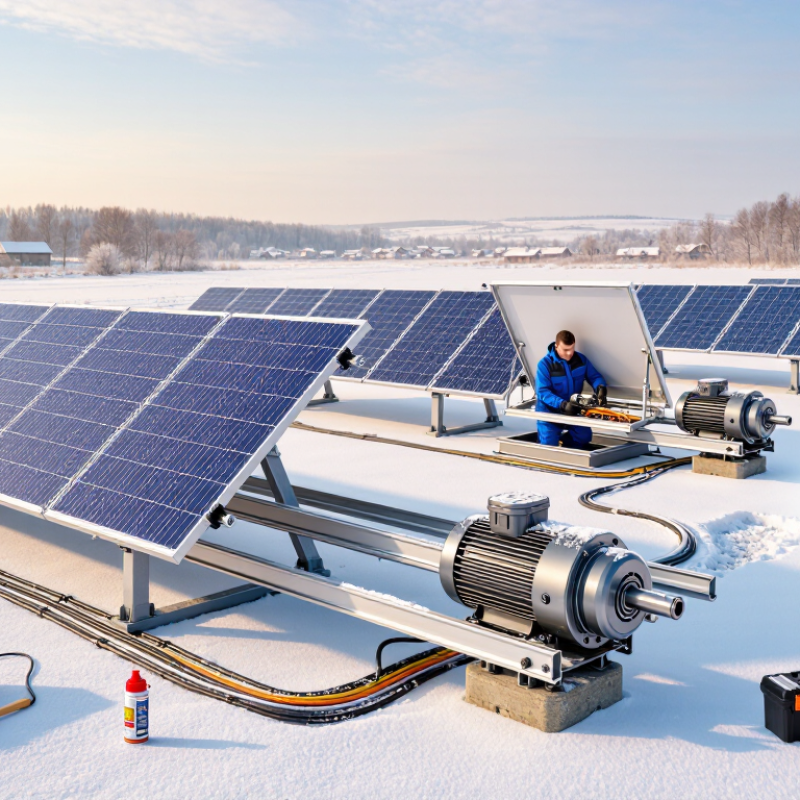
What Is Solar Tracking Motor Winter Maintenance?
Winter maintenance keeps solar tracking motors reliable during freezing temperatures, snow, and damp conditions. It involves checking moving parts before severe weather arrives. Technicians inspect motor housings, gearboxes, seals, cables, and mounting points for cracks or water entry. They also remove dirt that can harden around pivots and drive assemblies. Cold weather can increase resistance inside old grease. Use lubricant approved for the motor’s operating temperature. Too much grease can attract dust and hide mechanical wear.
The inspection should include electrical terminals, control enclosures, limit switches, and emergency stop functions. Loose connections may create heat during repeated movement. Snow and ice must never be cleared by forcing the tracker manually. That action can damage gears or bend structural parts. Instead, follow the equipment procedure and isolate power when required. Measure unusual motor noise, current draw, or movement speed. These details often reveal problems before a failure occurs. A checklist helps, but it can still miss a weak seal or intermittent cable fault. Careful observation remains important.
Tips: Keep snow away from motor vents and drainage paths. Check fasteners after strong winds. Record inspection dates and unusual sounds. Store replacement fuses and weatherproof cable connectors in a dry cabinet. Do not apply random household oil. Ask a qualified technician to review repeated faults, exposed wiring, or motors that stall below freezing. Even a clean inspection can be incomplete if the system has no recent performance records.
| Maintenance Area | What to Check or Do | Suggested Timing | Why It Matters in Winter | Record or Follow-Up |
|---|---|---|---|---|
| Motor and gearbox enclosure | Inspect the housing, seals, cable entries, and covers for cracks, loose fasteners, corrosion, or water ingress. Keep vents and drainage paths clear where fitted. | Before the cold season; recheck during routine winter inspections. | Moisture entering an enclosure can contribute to corrosion, insulation problems, or freezing damage. | Log visible damage, moisture, and any repairs. Follow the equipment manufacturer’s enclosure and sealing instructions. |
| Electrical connections and cables | Look for damaged insulation, loose conduit, exposed conductors, and signs of overheating or corrosion. Electrical testing and tightening should be performed by qualified personnel. | Before winter and after severe weather or an electrical fault. | Cold, moisture, and wind movement can worsen existing connection or cable defects. | Document defects and corrective work. De-energize and apply site lockout/tagout procedures before servicing. |
| Drive mechanism and moving parts | Check for unusual noise, vibration, binding, abnormal backlash, or restricted travel. Inspect accessible linkages and bearings according to the maintenance instructions. | During scheduled inspections and whenever tracking performance changes. | Ice, snow, or debris may obstruct movement, while cold conditions can affect lubricants and mechanical clearances. | Record symptoms and operating conditions. Use only specified lubricants and service methods. |
| Lubrication | Verify lubrication points and lubricant condition where applicable. Replenish or replace lubricant only when the service schedule calls for it and with the specified product. | Before winter, or at the interval stated in the equipment maintenance schedule. | Some lubricants change viscosity at low temperatures; incorrect lubricant can impair movement or increase wear. | Record lubricant type, service date, and any observed contamination or leakage. |
| Snow and ice clearance | Check that snow or ice is not blocking the tracker’s travel path, motor housing, or access points. Remove obstructions using approved, non-damaging methods. | After snow or freezing-rain events, when safe access is available. | Accumulated snow and ice can restrict motion and add loads to tracker structures and drive components. | Follow site procedures and structural limits. Do not strike components or use unapproved heat or chemicals. |
| Motor heaters or temperature controls | If fitted, inspect heater wiring, controls, and temperature indications; verify operation using the prescribed test procedure. | Before the cold season and when an alarm or temperature issue occurs. | Heaters may help keep specified components within their rated operating conditions, but not all tracker motors include them. | Record test results and alarms. Do not add heaters or change settings without engineering and manufacturer approval. |
| Tracking operation and alarms | Review controller alarms, motor current or other available operating data, and tracker position. Compare operation with the site’s normal baseline. | As part of routine monitoring; investigate unexpected stops or repeated alarms promptly. | Changes can reveal obstruction, electrical faults, or increased mechanical resistance before damage worsens. | Note alarm codes, weather conditions, affected tracker rows, and corrective actions. |
| Safe servicing and documentation | Use the site’s electrical and mechanical safety procedures. Isolate equipment where required, verify safe conditions, and keep personnel clear of moving structures. | Every time inspection or maintenance requires access to hazardous areas or equipment. | Trackers can move automatically, and winter surfaces may be slippery or difficult to access. | Use qualified personnel, follow the site risk assessment and lockout/tagout process, and retain completed inspection records. |
It checks moving parts before freezing weather, snow, and damp conditions arrive. Inspect the housing, gearbox, seals, cables, and mounting points. Remove dirt around pivots and drive assemblies. Cold temperatures can make old grease resist movement.
Clear buildup gently, following the equipment procedure. Never force the tracker manually. That can damage gears or bend structural parts. Isolate power when required. Frozen parts need patience.
Check cracked seals, corrosion, loose bolts, water trails, and packed debris. Examine the gearbox and drive linkage. Look for unusual play or binding. Compare movement with the normal operating range.
Inspect terminals, control enclosures, limit switches, emergency stops, cables, and conduit. Look for brittle insulation, loose connectors, and condensation. Never open an energized enclosure. A qualified technician should assess electrical faults.
Use lubricant approved for the motor’s operating temperature. Do not apply random household oil. Too much grease can attract dust and hide mechanical wear. Instructions should decide the product and amount.
Listen for grinding, clicking, or repeated stalling. Watch for slower movement and unusual noise. Current draw can also reveal developing problems. Record cold-morning symptoms, weather, and photos.
Run a controlled movement test when conditions are safe. Confirm that the area is clear. Check movement under normal operating conditions. Stop if the motor binds or stalls under load.
Not always. A checklist may miss a weak seal or intermittent cable fault. Repeated slow movement needs closer technical inspection. Recent performance records make patterns easier to recognize, but records may still be incomplete.
Winter maintenance helps solar tracking motors operate safely and reliably through cold temperatures, snow, and moisture. How to maintain solar tracking motors in winter? Begin by checking the motor, drive mechanism, mounting hardware, and control settings before temperatures drop. Remove dirt and debris, tighten loose connections, and confirm that protective covers and seals are intact. Inspect cables, connectors, bearings, and moving parts for wear or moisture, and apply suitable protection or lubrication where needed.
During freezing weather, monitor the tracker for unusual noise, slow movement, ice buildup, or unexpected position changes. Keep moving components clear of snow and ice without forcing the mechanism, and follow safe operating procedures if severe weather requires the tracker to remain in a protected position. After winter, inspect the system again, remove accumulated debris, check electrical connections and mechanical movement, and test tracking performance gradually. Recording any issues and maintenance actions can help identify problems early and prepare the system for the next season.

 Trope Solar