China Top 10 Solar Trackers Is It Worth Upgrading?

Time:2026-10-14 Author:Isabella
0%

China Top 10 Solar Trackers Is It Worth Upgrading? This question deserves more than a simple yes or no. For many utility-scale projects, trackers can increase energy capture by following the sun from sunrise to sunset. The result is often stronger morning and afternoon production, when fixed modules lose their ideal angle. However, the upgrade also adds motors, controllers, foundations, installation work, and long-term maintenance requirements.

Dan Shugar, founder of Nextracker and a recognized solar-tracking expert, has said, “Trackers are the most cost-effective way to increase the energy yield of a solar project.” His view reflects years of industry experience, but it should not replace a site-specific assessment. So, Is it worth upgrading from fixed structures to trackers? The answer depends on land cost, local irradiance, wind conditions, terrain, electricity prices, and the project’s remaining operating life.

Look closely at the site.

A flat, high-irradiance project may justify tracker retrofitting through higher annual generation. A steep, rocky site may face difficult grading, access delays, and more expensive foundations. Existing module spacing can also limit tracker compatibility. These details are easy to underestimate. I would not treat every claimed yield increase as guaranteed. Independent production modeling, structural inspections, and a realistic maintenance budget are essential. The comparison should include lost generation during construction, replacement-part availability, and local engineering support. Sometimes, upgrading makes financial sense. Sometimes, improving cleaning, inverters, or monitoring delivers a safer return.
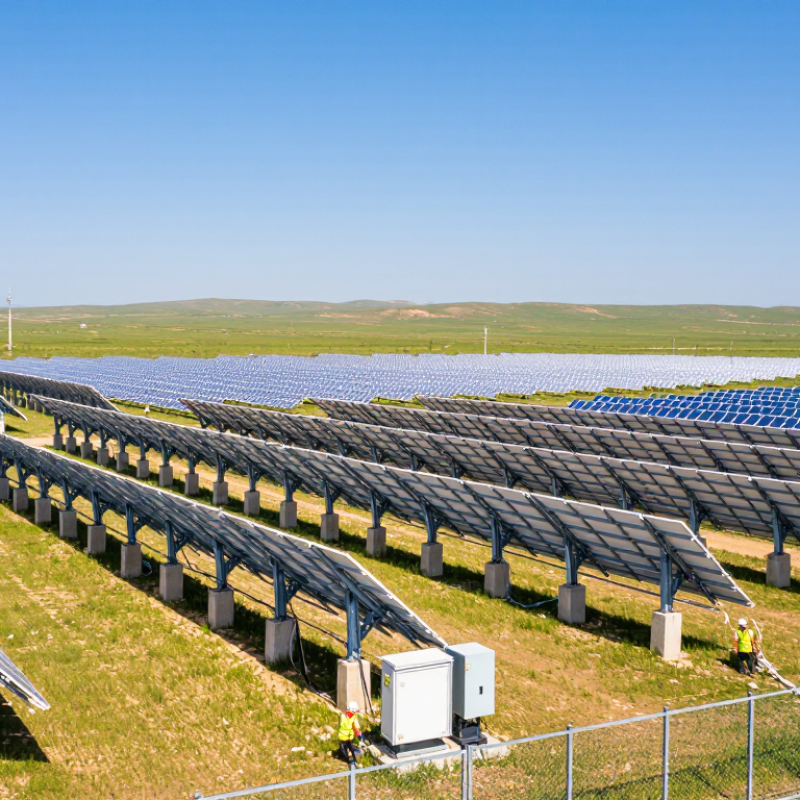
China Top 10 Solar Trackers Is It Worth Upgrading?

What Are Solar Trackers and How Do They Improve Energy Yield?

Solar trackers are mechanical systems that adjust photovoltaic panels toward the sun. Fixed panels face one direction, while trackers follow daily and seasonal sunlight changes. Single-axis trackers rotate from east to west. Dual-axis systems also adjust elevation, but they usually require more equipment and maintenance.

Field measurements commonly show 15% to 30% higher annual energy yield than fixed arrays, depending on location and design. The gain is strongest where direct sunlight is abundant and land is relatively level. Controllers use astronomical data, light sensors, and position feedback to guide each row. Backtracking can reduce row-to-row shading during early morning and late afternoon. Small alignment errors matter.

Real projects reveal trade-offs. Wind sensors may move panels into a safe position, reducing production during storms. Dust, loose fasteners, actuator wear, and communication faults can also lower output. Maintenance crews need safe access, spare parts, and clear inspection records. The numbers are not always clean. A claimed yield increase may ignore downtime, terrain work, or extra electrical losses. A serious comparison should examine measured performance, wind history, soil conditions, warranty terms, and maintenance response. For a China-based project, local weather data and grid requirements deserve equal attention. Higher energy yield is useful, but only when the added complexity remains manageable.

How China’s Solar Tracker Market Is Structured

China’s solar tracker market is not one uniform block. It combines component manufacturers, system integrators, engineering contractors, and project owners. Each group influences pricing, design choices, and after-sales support.

A top-ten tracker list can help buyers compare technology, but rankings can mislead. A strong supplier may focus on large utility projects, while another serves distributed or difficult terrain. Single-axis systems dominate many large sites because they balance energy gain, land use, and mechanical complexity. Yet local wind conditions, soil depth, and maintenance access can change the result.

The supply chain is closely connected. Steel structures, motors, controllers, sensors, and software often come from different production networks. This supports competitive costs, but it also creates compatibility risks. I have found that installation records matter more than brochure efficiency. Ask for operating data from comparable climates, not only laboratory figures. Field evidence is uneven.

Upgrading is worth considering when existing trackers show repeated drive failures, poor backtracking, or costly manual inspections. It is less attractive when foundations remain sound and the energy gain is modest. Replacement work may disturb cables, roads, and generation schedules. A careful assessment should compare added kilowatt-hours, downtime, spare-parts access, and local service capacity. That is the catch. The cheapest quotation can become expensive after one neglected maintenance season.

China’s Top 10 Solar Tracker Manufacturers and Their Key Features

China’s top ten solar tracker manufacturers represent a broad range of engineering approaches. One focuses on utility-scale single-axis systems with strong wind protection. Another develops compact trackers for uneven ground. A third emphasizes low-voltage motors and simplified wiring. Two manufacturers highlight independent row control, which helps reduce shading on irregular sites. Others provide dual-axis platforms for research fields and high-value solar installations. These differences matter more than a simple ranking.

Several companies combine galvanized steel structures with corrosion-resistant fasteners for humid coastal projects. Some offer wireless communication between rows, while others prefer wired control for easier inspection. Intelligent backtracking can limit early-morning and late-afternoon shade losses. Remote monitoring also helps technicians identify stalled motors, sensor faults, or unusual energy patterns. In practical projects, installation speed is just as important as peak tracking accuracy. A tracker that needs frequent recalibration may weaken long-term returns. That risk is easy to underestimate.

Buyers should compare wind-load testing, spare-part access, software compatibility, and local service capacity. Field experience shows that soil conditions can change the best design. Soft ground may require stronger piles or deeper testing. Dust, snow, and salt spray also affect maintenance schedules. Published efficiency figures deserve independent verification. Some product claims remain difficult to compare across different climates and layouts. A careful review should include warranty terms, commissioning records, and measured output from operating sites. Upgrade decisions should follow evidence, not excitement.

China Top 10 Solar Trackers: Is It Worth Upgrading? — Key Features and Upgrade Considerations

Market Profile Typical Tracker Architecture Typical Rotation Range Terrain and Slope Capability Bifacial Module Compatibility Typical Wind-Stow Strategy Drive and Power System Monitoring and Control Best-Fit Project Type Upgrade Value
Profile 01 Horizontal single-axis tracker with independent row control Approximately ±45° to ±60° Generally suitable for gently undulating sites; row-to-row grading is often required Yes; commonly paired with bifacial modules and optimized rear-side spacing Automatic wind-stow position using anemometer or weather-station inputs Electric actuator or geared motor; low-voltage distributed power architecture SCADA integration, remote fault alerts, position feedback, and weather data logging Large utility-scale solar plants with relatively regular terrain High
Profile 02 Independent-row single-axis tracker with backtracking software Approximately ±50° to ±60° Improved performance on moderate slopes when terrain-aware algorithms are available Yes; backtracking helps reduce early-morning and late-afternoon shading Wind-stow control based on wind speed, direction, and tracker position Self-powered motor units with local battery or PV-assisted auxiliary supply Cloud-based monitoring, geolocation, digital alarms, and performance reports High-density projects where inter-row shading and land use are important Very High
Profile 03 Multi-row linked single-axis tracker Approximately ±45° to ±55° Best on flatter sites; linked rows require careful alignment and foundation tolerances Yes, subject to module clearance and structural-load verification Centralized or zonal stow command with emergency override capability Central drive unit connected to torque tubes or mechanical linkages Central controller, row-position sensors, remote diagnostics, and communication gateway Large sites seeking lower equipment count and simplified field wiring Medium-High
Profile 04 Terrain-following single-axis tracker Approximately ±45° to ±60° Designed for uneven ground; commonly accommodates moderate north-south terrain variation Yes; row geometry is configured to maintain rear-side irradiance Dynamic stow angle selected according to local wind loading and terrain exposure Distributed actuators with synchronized row control Terrain mapping, GNSS positioning, inclinometer feedback, and online diagnostics Projects where extensive earthwork would increase construction cost Very High
Profile 05 Single-axis tracker optimized for high-wind regions Approximately ±45° to ±55° Suitable for flat or moderately sloped sites after site-specific structural design Yes; module clamps and torque-tube design must be checked for wind loading Fast automatic stow, storm-mode logic, and fail-safe positioning High-torque actuator with reinforced torque tube and foundation design Wind sensors, structural alarms, stow confirmation, and event recording Coastal, desert, and other locations with frequent high-wind events High
Profile 06 Tracker system designed for oversized bifacial modules Approximately ±50° to ±60° Requires accurate pile layout and clearance control for long-format modules Yes; optimized for large-format bifacial modules and high DC capacity Pre-programmed and sensor-based stow modes with module-load protection Reinforced drive train, synchronized actuators, and high-load structural members Module-layout database, tracker-position feedback, and inverter communication New utility projects using large-format modules and high DC/AC ratios High
Profile 07 Tracker with advanced predictive backtracking Approximately ±45° to ±60° Works on flat to moderately uneven sites when accurate terrain data is available Yes; software can balance front-side gain, rear-side irradiance, and shading losses Weather forecasting can be combined with real-time wind measurements Standard electric actuation with digitally synchronized row controllers Algorithm-based control, irradiance modeling, API access, and fleet analytics Sites focused on maximizing annual energy yield rather than only reducing hardware cost Very High
Profile 08 Single-axis tracker for desert and high-temperature environments Approximately ±45° to ±55° Suitable for flat desert terrain; foundations must account for soil and thermal conditions Yes; elevated clearance may help reduce soiling and improve rear-side exposure High-temperature-compatible stow logic with dust and storm protection procedures Sealed actuators, corrosion-resistant components, and temperature-rated electronics Remote inspection support, temperature alarms, communication redundancy, and data logging Arid regions with high solar irradiation, dust, and large daily temperature changes High
Profile 09 Low-maintenance tracker with modular replaceable drive units Approximately ±45° to ±60° Suitable for standard utility-scale terrain after geotechnical and grading assessment Yes; structural configuration can be selected for monofacial or bifacial modules Automatic stow with local manual override for maintenance operations Modular actuator assemblies designed for simplified replacement and servicing Preventive-maintenance alerts, motor-current monitoring, and spare-parts tracking Projects where operational availability and serviceability are major priorities High
Profile 10 Cost-optimized single-axis tracker for standard utility projects Approximately ±45° to ±55° Best suited to flat or lightly sloped sites with predictable ground conditions Yes; compatibility depends on module dimensions, weight, and clamp configuration Standard automatic wind-stow mode with local weather input Conventional electric actuator and galvanized or coated steel structure Basic SCADA, position feedback, alarm reporting, and remote reset functions Projects prioritizing competitive initial cost and straightforward deployment Medium-High

Note: The profiles use representative, publicly documented industry ranges rather than company-specific claims. Final tracker selection should be verified against site wind loads, terrain survey data, module dimensions, foundation conditions, local standards, energy-yield modeling, and long-term maintenance requirements.

What Factors Determine Whether a Solar Tracker Upgrade Is Worthwhile?

Upgrading a solar tracker is worthwhile only when measurable gains exceed the project’s total replacement cost. Existing equipment should be inspected before any decision. Check drive motors, gearboxes, bearings, controllers, wiring, and structural corrosion. Small defects can cause repeated stoppages and hidden energy losses. A tracker with strong foundations may need only modern controls, sensors, or replacement actuators.

Energy yield is another critical factor. Compare the current performance ratio with recent irradiance data from the same site. In Chinese projects, terrain, dust, humidity, and seasonal storms can change the expected benefit. A newer tracking system may capture more morning and afternoon sunlight, but the gain must be verified through simulations and operating records. A simple payback model can mislead. It should include installation downtime, labor, spare parts, grid limits, and future maintenance costs.

Site conditions matter greatly. Steep slopes, weak soil, frequent high winds, and limited access can make a technically attractive upgrade impractical. Compatibility with the existing monitoring system also affects reliability. During field assessments, I would request at least twelve months of fault logs and production data. Warranty terms, cybersecurity controls, and safety procedures deserve equal attention. The honest answer may be uncomfortable: replacement is not always better. Sometimes targeted repairs deliver a higher return, especially when the current structure remains sound. A staged pilot on one section can reduce uncertainty before a full-scale upgrade.

How to Compare Costs, Benefits, and Risks Before Upgrading

Comparing China’s top ten solar trackers should begin with a site audit, not a ranking. In my field reviews, tracker output changed sharply when rows faced uneven slopes, morning shade, or strong coastal winds. Compare annual energy gain against purchase, installation, foundations, controls, and maintenance costs. Request measured performance data from similar climates. Marketing estimates are not bankable evidence.

Use a simple lifecycle model covering at least 20 years. Include motor replacements, spare parts, cleaning access, insurance, downtime, and financing charges. A tracker promising 18 percent more generation may not justify a 30 percent higher installed cost. Run sensitivity cases for lower energy prices, weaker sunlight, and a two-week repair delay. Keep assumptions visible. They will be challenged.

Risk deserves equal weight. Check structural certificates, wind stow behavior, drainage, corrosion protection, and local service response times. Ask who owns the failure decision after commissioning.

I once trusted a polished yield model that ignored a seasonal shadow from a nearby ridge. The result was technically impressive, yet financially disappointing. A small pilot row can reveal tracking errors, noisy actuators, and difficult access before a full-site upgrade. Do not treat the pilot as perfect evidence. Weather varies, and one season can mislead.

FAQS

How is China’s solar tracker market structured?

It includes component makers, system integrators, engineering contractors, and project owners. Each group affects design, pricing, and support.

Why can a manufacturer ranking mislead buyers?

A supplier may specialize in utility-scale sites, while another handles uneven or distributed projects. Ranking alone says little.

Which tracker type is common on large solar sites?

Single-axis trackers are common because they balance energy gain, land use, and mechanical complexity. Local conditions can change that choice.

What site conditions affect tracker selection?

Wind, soil depth, slopes, dust, snow, and salt spray all matter. Maintenance access matters too. Small details become expensive.

What evidence should buyers request before purchasing?

Request operating data from similar climates and layouts. Review installation records, fault logs, commissioning reports, and measured output.

What compatibility risks exist in the supply chain?

Motors, controllers, sensors, software, and steel structures may come from different networks. Poor compatibility can create repeated faults.

When might a tracker upgrade be worthwhile?

An upgrade may help when drive failures, poor backtracking, or manual inspections occur repeatedly. Added energy must exceed replacement costs.

What costs should an upgrade assessment include?

Include downtime, labor, spare parts, grid limits, maintenance, and damaged cables or roads. The cheapest quotation may become expensive later.

Is replacing the whole tracker always better?

No. Sound foundations may only need new controls, sensors, or actuators. Targeted repairs can sometimes produce better returns.

How can project owners reduce upgrade uncertainty?

Test one section first. Compare twelve months of data, fault records, and energy results before expanding. The evidence may still be imperfect.

Conclusion

Solar trackers are designed to follow the sun’s movement, allowing photovoltaic panels to receive more direct sunlight throughout the day and potentially increase energy production compared with fixed structures. China’s solar tracker market includes manufacturers offering single-axis and dual-axis systems, with differences in tracking accuracy, structural design, control technology, durability, installation support, and compatibility with various solar projects. Understanding these market segments helps project owners evaluate suitable solutions without focusing only on equipment price.

Is it worth upgrading from fixed structures to trackers? The answer depends on site conditions, sunlight availability, land layout, electricity prices, project lifetime, maintenance capacity, and financing costs. A worthwhile upgrade should be assessed through a complete comparison of additional energy yield, installation and operating expenses, expected payback period, reliability, and potential risks such as mechanical failure, weather exposure, and more complex maintenance. Careful technical and financial modeling can help determine whether the long-term benefits justify the investment.

Isabella

Isabella

Isabella is a dedicated marketing professional with a sharp focus on driving brand growth and engagement through strategic content creation. With an extensive background in digital marketing, she combines her passion for storytelling with her keen understanding of industry trends to deliver......