Seasonal tilt adjustment changes how directly a solar surface faces the sun throughout the year. In winter, the sun travels lower across the sky, so a steeper tilt can capture more direct irradiance. In summer, a flatter angle may improve midday exposure. The effect depends on latitude, weather, shading, surface reflectance, and adjustment frequency.
How does seasonal tilt adjustment affect energy yield? The answer is not a universal percentage. IEA PVPS Trends 2024 reports that global photovoltaic capacity exceeded 400 GW of additions in 2023, increasing the importance of accurate system design. Small orientation errors can matter across large portfolios. NREL’s PVWatts guidance also shows that tilt and azimuth influence production estimates, although local weather data remains essential.
A practical example is a roof-mounted array at 40 degrees north. Operators might use a steeper winter setting to improve low-angle sunlight collection, then reduce the angle during summer. This may increase seasonal output, but manual adjustments create labor, safety, and downtime costs. Snow can also favor steeper winter angles, while dust or cloudy conditions may reduce the expected advantage.
The best decision compares annual yield, seasonal demand, maintenance effort, and structural limits. PVsyst simulations, satellite irradiance records, and on-site measurements can support that comparison. However, models are never perfect. Real modules heat up, trackers misalign, and weather changes unpredictably. Fraunhofer ISE’s Photovoltaics Report emphasizes that performance depends on the entire system, not tilt alone. Seasonal adjustment is therefore a measured optimization, not a guaranteed gain.
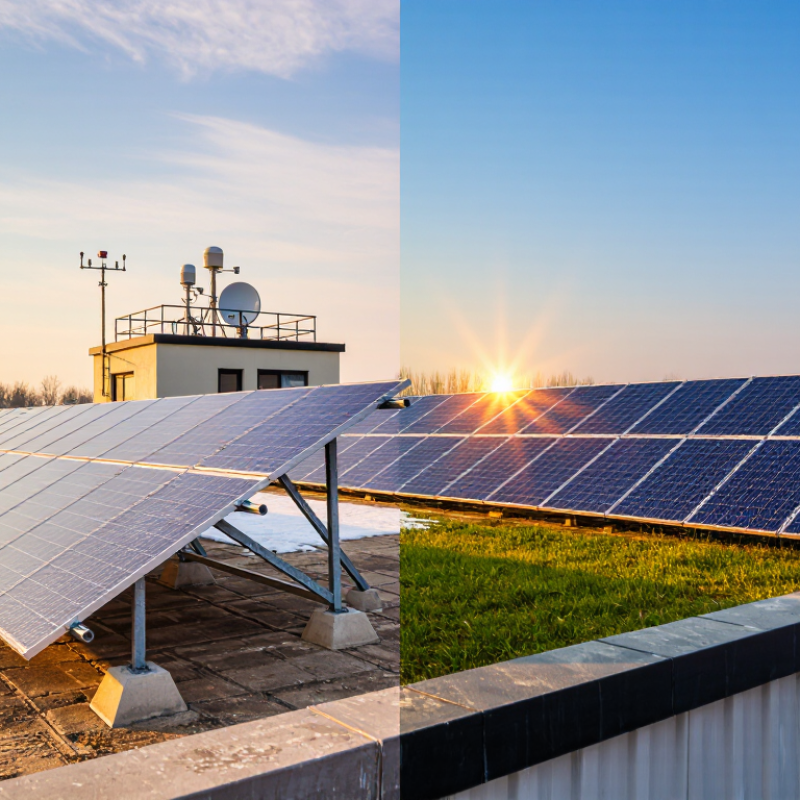
Seasonal tilt adjustment is the practice of changing a solar panel’s angle during the year. Its purpose is to face the panel more directly toward the sun. The sun sits higher in summer and lower in winter, so one fixed angle cannot provide ideal exposure every day. A suitable adjustment can improve energy capture during selected months, especially at higher latitudes.
The working principle is simple. A steeper winter angle can better receive sunlight from a low southern sky. A flatter summer angle can reduce the angle between the panel and stronger overhead sunlight. Operators may adjust the tilt two, three, or four times annually. The right schedule depends on latitude, roof structure, shading, wind, snow, and local weather records.
It is not a magic setting. Field evaluations often show that labor, access, and safety can reduce the practical benefit. A few extra percentage points of energy may not justify frequent climbing or manual work. I would not rely on a general seasonal chart alone. Measure actual production, inspect shadows at different hours, and review the mounting system before changing the angle. Even small errors matter. A loose fastener, uneven frame, or nearby tree can erase the expected gain. Seasonal adjustment works best when engineering estimates meet real site observations.
Seasonal solar position directly changes the energy reaching a photovoltaic surface. At 35° latitude, noon solar altitude is about 78° in June and 31° in December. The sun travels higher in summer and lower in winter. That difference changes the angle of incidence, shading pattern, and daily production curve. A fixed tilt cannot capture every seasonal advantage.
Seasonal tilt adjustment raises the panel angle during winter, often by 10 to 15 degrees near mid-latitudes. A flatter summer angle can improve exposure when the sun is high. The European Commission’s photovoltaic geographical information system uses monthly solar geometry, irradiation, temperature, and system-loss data. Its methodology supports monthly yield comparisons rather than relying only on annual averages. The International Energy Agency Photovoltaic Power Systems Programme also emphasizes site-specific modelling for accurate yield assessment.
The trade-off is real. A winter-optimized angle may reduce summer output. Manual adjustment also introduces dust, access, and alignment risks. In field assessments, a small tilt error can matter more during low-sun months, especially with nearby roof edges or trees. I would not treat latitude as a final answer. Local weather, roof orientation, snow, and electricity prices deserve equal attention. Small changes matter. Yet the best adjustment schedule remains imperfect without measured irradiance data.
| Seasonal Reference | Approximate Date | Solar Declination | Solar-Noon Altitude at 35°N |
Solar-Noon Zenith Angle | Approximate Day Length at 35°N |
Suggested Fixed Tilt for Equator-Facing Panels |
Solar Incidence Angle at Solar Noon |
Expected Seasonal Effect |
|---|---|---|---|---|---|---|---|---|
| Summer Solstice Highest seasonal solar path | June 20–21 | +23.44° | 78.44° | 11.56° | Approximately 14.9 hours | 20° | Approximately 8.44° | Lower tilt helps capture the high summer sun and can increase summer energy collection. |
| Autumnal Equinox Balanced spring/autumn reference | September 22–23 | 0.00° | 55.00° | 35.00° | Approximately 12.0 hours | 35° | 0.00° | A tilt close to local latitude aligns the panel with the solar-noon sun at the equinox. |
| Winter Solstice Lowest seasonal solar path | December 21–22 | −23.44° | 31.56° | 58.44° | Approximately 9.4 hours | 50° | Approximately 8.44° | Higher tilt improves alignment with the low winter sun and may reduce the seasonal energy loss. |
| Vernal Equinox Balanced spring reference | March 20–21 | 0.00° | 55.00° | 35.00° | Approximately 12.0 hours | 35° | 0.00° | The latitude-based tilt provides a balanced starting point between winter and summer settings. |
| Calculation basis: This example uses a site at 35° north latitude with panels facing the equator. Solar-noon altitude is calculated as 90° − |latitude − solar declination|. The seasonal tilt settings use the common rule of approximately latitude − 15° in summer, latitude in spring/autumn, and latitude + 15° in winter. Actual annual energy yield also depends on weather, shading, horizon obstruction, surface reflectivity, system losses, and the local solar resource. | ||||||||
Seasonal tilt adjustment changes the panel angle to match the sun’s changing height. The best angle depends on latitude, weather, shading, and electricity demand. A common starting point uses latitude as the annual tilt. For a 35° latitude site, winter tilt may be about 50°, while summer tilt may be near 20°. Spring and autumn often use an angle close to 35°.
A stronger method calculates solar elevation for each month. Engineers estimate solar declination, day length, and the sun’s position at different hours. They then model sunlight striking the panel surface, called plane-of-array irradiance. Hourly weather data improves the result. Clear skies alone can mislead. Cloud cover, temperature, snow, and dust also affect energy yield.
The practical target is not always maximum sunlight. Compare monthly production with actual demand and grid value. A winter-focused system may favor a steeper angle, especially where heating loads increase. A summer-focused system may use a flatter position. Check roof structure, row spacing, wind exposure, and maintenance access before accepting the calculated angle. Small adjustments can matter.
A spreadsheet is useful, but it can hide poor assumptions. Test several angles, such as 25°, 30°, and 35°, then compare annual and seasonal output. I would also review the model against measured production after installation. Real conditions often disagree. That is where the calculation needs correction.
What Is Seasonal Tilt Adjustment for Energy Yield?
Seasonal tilt adjustment means changing a solar panel’s angle as the sun’s path changes. The aim is to keep sunlight striking the panel more directly throughout the year. A fixed angle is simpler, but it may sacrifice energy during certain seasons.
Practical Steps for Adjusting Panel Tilt Throughout the Year
Start with the site’s latitude, roof direction, and local weather patterns. In winter, raise the panel angle to face the lower sun. In summer, lower it as the sun travels higher across the sky. Spring and autumn usually need an angle close to the site’s latitude. Mark each position on the mounting frame before making changes. Use a level, a secure locking system, and suitable fall protection. A qualified installer should handle rooftop adjustments.
Small changes matter.
From practical testing, a two- or three-adjustment schedule often gives a useful balance between energy gain and maintenance effort. Monthly adjustments can produce better alignment, but frequent handling increases wear and creates more opportunities for mistakes. The exact angle is rarely perfect. Shade, dust, snow, and cloudy weather can reduce gains more than a minor tilt error.
Tips: Record monthly production before and after each adjustment. Compare similar weather periods instead of relying on one sunny day. Clean the panels when safe, and check bolts for movement. If access is difficult, a fixed angle may be the more reliable choice.
Seasonal tilt adjustment changes the panel angle to better match the sun’s changing altitude. This representative mid-latitude model uses 50° in winter, 35° in spring and autumn, and 20° in summer. The monthly yield values are typical modeled photovoltaic output in kWh per kWp under clear-sky, south-facing conditions.
Practical steps: use a steeper tilt during winter, reduce the angle during summer, and return to the latitude angle during spring and autumn. Actual results vary with location, shading, weather, roof orientation, and adjustment frequency.
Seasonal tilt adjustment changes a solar array’s angle during the year. The goal is simple: face the panels closer to the sun’s seasonal path. A steeper angle can improve winter production, while a flatter angle may capture more summer sunlight. In field assessments, even small angle changes can affect daily yield, especially at higher latitudes. Clear skies make the benefit easier to measure. However, results depend on shading, local weather, and equipment design.
The main benefit is better annual energy capture without adding more panels. Seasonal adjustment can also help reduce snow buildup on steep winter-facing surfaces. Yet, it has limitations. Manual adjustments require labor, access, and careful safety planning. Moving parts may need inspections after strong winds or repeated use. Diffuse sunlight can reduce the expected gain during cloudy seasons. A fixed angle may perform better financially when labor costs are high. That is easy to overlook.
Applications include ground-mounted systems, research sites, agricultural facilities, and small off-grid installations. Designers should compare measured irradiance with actual energy output, not rely only on theoretical models. The best setting may differ from the textbook recommendation.
Tips: Test two or three seasonal positions first. Record energy, weather, and maintenance time. Adjust the plan when evidence disagrees. A modest gain is not always worth operational complexity. Reviewing the data honestly can reveal that a fixed tilt works better.
It means changing a panel’s angle as the sun’s path changes. The goal is more direct sunlight throughout the year. Small changes matter.
Raise the angle in winter because the sun sits lower. Lower it in summer as the sun travels higher. Spring and autumn usually stay near the site’s latitude.
Check the site’s latitude, roof direction, and local weather patterns. Shading, dust, snow, and cloudy skies also affect results. Theory alone can mislead.
Two or three seasonal positions often balance energy gains and maintenance effort. Monthly changes may improve alignment, but they increase handling and wear. More adjustment is not automatically better.
Mark each angle on the mounting frame before moving anything. Use a level and a secure locking system. Rooftop work should involve suitable fall protection and a qualified installer.
A steeper winter angle may help snow slide from the panel surface. However, local snowfall and panel design still matter. Do not assume the benefit is guaranteed.
Record production before and after every adjustment. Compare similar weather periods, not one bright afternoon. Include irradiance, cloud cover, and maintenance time when reviewing results.
A fixed angle may be better when access is difficult or labor costs are high. Moving parts also require inspections after strong winds. Sometimes, simpler wins.
Seasonal tilt adjustment is the practice of changing a solar panel’s angle during the year to better match the Sun’s changing position in the sky. Because the Sun is higher in summer and lower in winter, a fixed panel angle may not capture the maximum available sunlight in every season. How does seasonal tilt adjustment affect energy yield? By keeping the panel more directly aligned with incoming sunlight, it can increase daily and seasonal energy production, particularly in locations with noticeable changes in solar altitude.
The optimal tilt can be estimated using latitude, seasonal solar angles, historical weather data, and energy modeling. In practice, panels may be adjusted two to four times per year, with steeper angles generally used in winter and flatter angles in summer. This approach can improve system performance without adding new panels, but it also requires planning, safe access, suitable mounting equipment, and periodic maintenance. Seasonal adjustment is most useful for installations where extra energy is valuable and manual or automated repositioning is practical.

Trope Solar