2026 How to Choose Ballasted Mounts Over Roof Penetrations?

Time:2026-05-25 Author:Isabella
0%

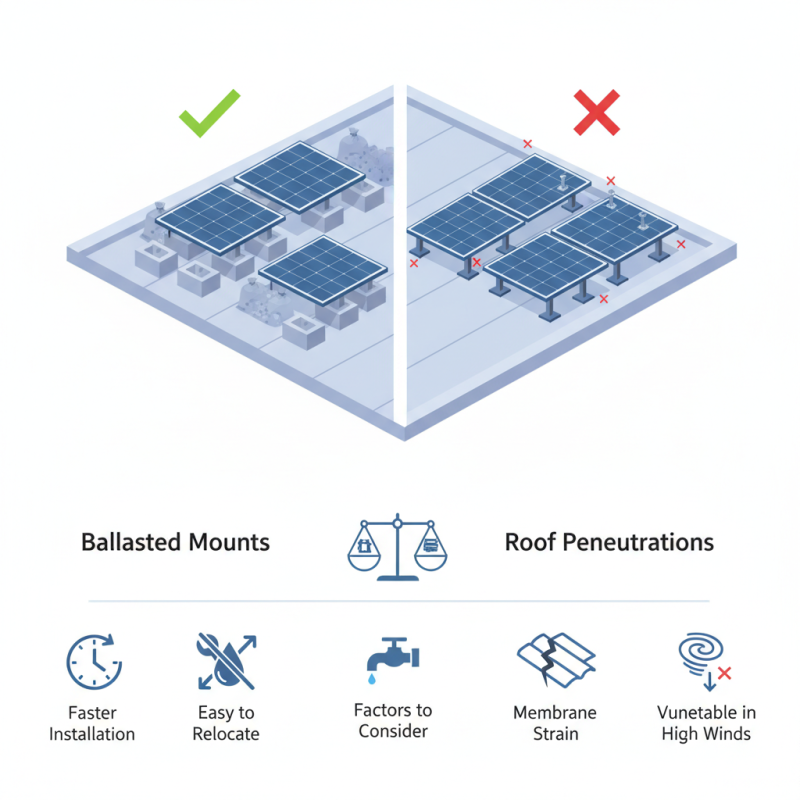
When designing roof systems, the decision between ballasted mounts and roof penetrations is critical. Many professionals ask, "Why use ballasted mounts instead of roof penetrations?" A study by the National Renewable Energy Laboratory found that ballasted systems can reduce installation time significantly. They are often easier to remove and relocate. This flexibility benefits both maintenance and future upgrades.

Ballasted mounts require no roof penetrations, minimizing the risk of leaks. According to the American Society of Civil Engineers, leaks are a leading cause of roof failures. Ballasted systems provide effective weight distribution, limiting strain on roofing membranes. However, these systems do have limitations. They can be vulnerable in high winds, and proper ballast weight is crucial.

While ballasted systems may seem advantageous, not all buildings are suited for them. Factors like roof type, local weather, and building codes must be considered. Selecting an appropriate mounting system is essential for long-term performance. Making an informed choice requires weighing the benefits and drawbacks of each option.
2026 How to Choose Ballasted Mounts Over Roof Penetrations?

Understanding Ballasted Mounts and Roof Penetrations

When considering solar panel installations, understanding the difference between ballasted mounts and roof penetrations is crucial. Ballasted mounts rely on weight to secure panels on rooftops. They do not require drilling into the roof structure. This can prevent potential leaks or structural damage. However, the weight of these mounts can pose challenges for some buildings.

Roof penetrations involve installing mounts directly into the building’s roof. This method provides a secure fit but comes with risks. Improper installation can lead to leaks and other issues down the line. Knowing the roofing material is essential when choosing this method. Some roofs are more prone to damage than others. The aesthetics of the building may also be affected by visible mounts.

In the decision-making process, consider your specific needs and building structure. Assess the long-term effects of each method. Cost is a factor, but reliability should be prioritized. Reflecting on these elements ensures a well-informed choice.

Advantages of Using Ballasted Mounts for Solar Installations

When it comes to solar installations, the choice between ballasted mounts and roof penetrations is crucial. Ballasted mounts offer distinct advantages in terms of installation and stability. They rely on weight to secure solar panels, eliminating the need for roofing alterations. This method preserves the integrity of the roof and minimizes the risk of leaks. Moreover, ballasted mounts can be adjusted easily. This flexibility is vital for optimizing solar energy capture.

One appealing aspect of ballasted systems is their speed of installation. Crews can often complete setups without extensive downtime. This means faster project turnover and quicker energy generation. However, it’s essential to consider local wind conditions and structural capabilities. Not every roof can support heavy ballasts without issues. Consulting with experts is vital for ensuring safety and effectiveness.

Cost-effectiveness is another factor. While initial costs may be higher, the long-term savings on maintenance are significant. Ballasted systems generally require less upkeep than those with roof penetrations. However, some might argue that the upfront investment can be daunting. Balancing these factors—expense versus the durability and maintenance frequency— can lead to a more informed decision.

Factors to Consider When Choosing Mounting Systems

When selecting mounting systems for solar arrays, there are critical factors to consider. Ballasted mounts provide an alternative to traditional roof penetrations. They often require no drilling into the roof. This method can help maintain roof integrity. However, it may not suit all rooftops.

One key aspect is the roof structure. Ballasted systems require a certain weight to keep them stable. This means your roof must handle the extra load. Additionally, local weather conditions play a significant role. High winds can shift ballasted systems. It’s vital to evaluate how your specific environment may impact your decision.

Cost-effectiveness is another factor. While ballasted mounts save on installation, they may incur higher material costs. Also, consider maintenance needs. PENETRATING MOUNTS often allow easier access for repairs. Ballasted systems might complicate this. Do thorough research on potential trade-offs. Each building's unique characteristics should guide your choice.

Impact of Roof Conditions on Mount Selection

When selecting ballasted mounts, roof conditions play a crucial role. Factors like roof slope, material, and integrity directly influence mount selection. A report by the National Renewable Energy Laboratory highlights that nearly 30% of roofing systems fail due to improper mount specifications. Therefore, understanding the existing conditions is essential for maximizing efficiency and safety.

Flat roofs often benefit from ballasted mounts. These mounts use weights to secure solar panels without penetrating the roof membrane. This method can prevent leaks and damage. However, if a roof shows signs of age or wear, it might not support heavy ballast. A study indicated that roofs over 15 years old are more likely to experience structural issues. Regular assessments can mitigate risks and ensure reliability.

Tips: Always check the roof’s load capacity before installation. Evaluate the material and existing damage carefully. Additionally, consulting roofing experts can provide insights into the best practices for your specific situation, ensuring long-term performance.

2026 How to Choose Ballasted Mounts Over Roof Penetrations? - Impact of Roof Conditions on Mount Selection

Roof Condition Recommended Mount Type Load Capacity (lbs) Installation Complexity Weather Resistance
Flat Roof Ballasted Mount 2000 Moderate High
Pitched Roof Roof Penetration 1500 High Moderate
Membrane Roof Ballasted Mount 1800 Low High
Asphalt Shingle Roof Penetration 1200 Moderate Moderate
Metal Roof Ballasted Mount 2200 High High

Cost Analysis: Ballasted Mounts vs. Roof Penetrations

When choosing between ballasted mounts and roof penetrations, cost is a major consideration. Ballasted mounts typically require less installation labor. They rely on weight to secure solar panels, avoiding roof alterations. This can lead to significant savings on both material and labor costs. However, the upfront investment might still be higher than traditional roof penetrations.

Roof penetrations often necessitate additional waterproofing measures. This ensures that the integrity of the roof remains intact. Long-term maintenance costs can rise if these penetrations lead to leaks or damage. Moreover, repairs can be costly and disruptive. It's essential to weigh these potential risks against immediate savings when evaluating options.

Additionally, local building codes might influence decision-making. Understanding regulations can prevent unforeseen expenses. Misjudging the long-term implications of either choice could result in regrets later on. Cost analysis, therefore, is not just about initial pricing. It involves understanding the balance of short-term savings and long-term risks.

FAQS

: What are ballasted mounts in solar installations?

: Ballasted mounts use weight to secure solar panels without altering the roof.

What is the main advantage of using ballasted mounts?

They preserve roof integrity and reduce leak risks during installation.

How does installation speed compare for ballasted mounts?

Ballasted systems allow for quicker setups and less downtime, leading to faster energy generation.

Why is consulting experts important for ballasted systems?

Local wind conditions and structural capabilities must be assessed for safety and effectiveness.

How do roof conditions affect the selection of mounts?

Factors like slope and material can influence the suitability of ballasted mounts for your roof.

Can old roofs support heavy ballasts effectively?

Older roofs may have structural issues, making them less suitable for heavy ballasted systems.

What should be checked before installing ballasted mounts?

Always assess the roof’s load capacity and check for any material damage before installation.

Are ballasted systems cost-effective in the long run?

They may have higher initial costs but generally require less ongoing maintenance, offering long-term savings.

What risks are associated with improper mount specifications?

Almost 30% of roofing systems fail due to improper specifications, highlighting the need for proper assessment.

What happens if a roof shows signs of wear before installation?

Aging roofs may not support heavy ballasts well, potentially leading to reliability issues.

Conclusion

The article "2026 How to Choose Ballasted Mounts Over Roof Penetrations?" delves into the critical considerations for selecting mounting systems for solar installations. It begins with an overview of ballasted mounts and roof penetrations, highlighting the unique advantages of ballasted mounts, particularly their non-intrusive nature and ease of installation. One primary reason to consider "Why use ballasted mounts instead of roof penetrations?" is their ability to minimize roof damage and leaks, enhancing the longevity of the roofing system.

Additionally, the article discusses essential factors influencing mount selection, such as roof conditions, building codes, and aesthetic considerations. A cost analysis is provided to compare the economic implications of both mounting options, revealing that while ballasted mounts may have higher upfront costs, they often lead to savings in maintenance and repairs over time. Understanding these dynamics enables property owners to make informed decisions that align with their specific needs and circumstances.

Isabella

Isabella

Isabella is a dedicated marketing professional with a sharp focus on driving brand growth and engagement through strategic content creation. With an extensive background in digital marketing, she combines her passion for storytelling with her keen understanding of industry trends to deliver......