Fixed Tilt vs Solar Trackers 5 Essential Tips for Buyers?

Time:2026-05-01 Author:Oliver
0%

When considering solar energy solutions, the choice between fixed tilt systems and solar trackers is crucial. Many buyers often ask, "What is the difference between fixed tilt and solar trackers?" This decision can significantly impact energy production and overall efficiency.

Fixed tilt systems provide a stable, low-maintenance option. They are easier to install and require fewer adjustments over time. However, their fixed position means they may not capture sunlight as effectively throughout the day. Solar trackers, on the other hand, adjust their angle as the sun moves. This technology can increase energy output dramatically, but it does come with higher installation and maintenance costs.

Buyers must weigh these options carefully. The benefits of solar trackers can be compelling, yet the complexities involved may raise questions. Reliability, volatility in energy needs, and budget constraints all play critical roles. Making an informed choice can be daunting, especially when all factors are considered. The ideal approach involves understanding both systems' advantages and disadvantages to ensure long-term success in solar energy investments.
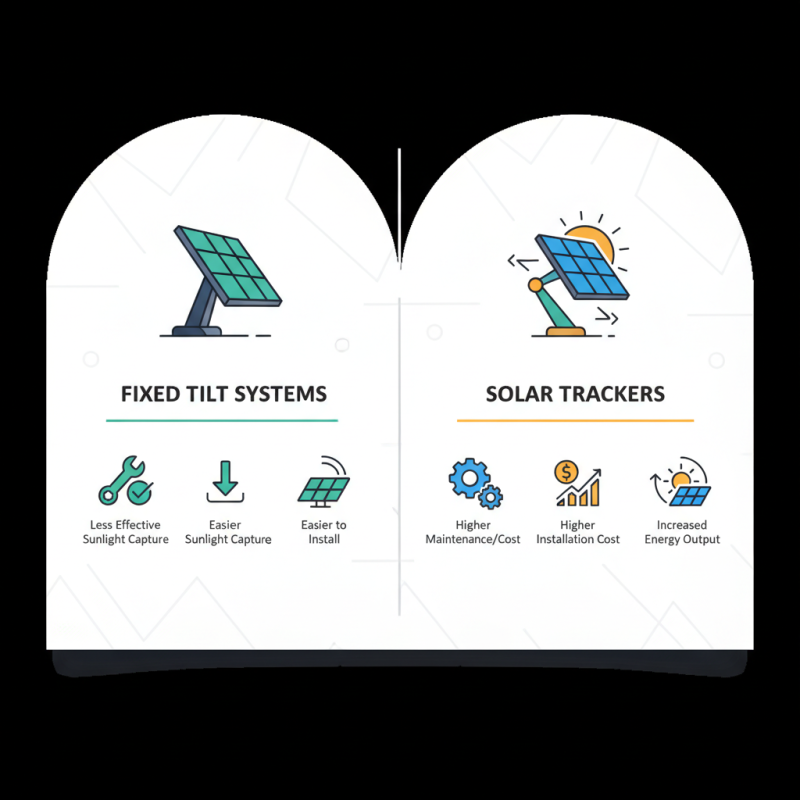
Fixed Tilt vs Solar Trackers 5 Essential Tips for Buyers?

Understanding Fixed Tilt Solar Systems: Benefits and Drawbacks

Fixed tilt solar systems are popular among many buyers. They offer a simple installation process and lower upfront costs. These systems have a stationary setup, which means they do not track the sun’s movement. This can lead to less optimal energy production compared to solar trackers. However, many users appreciate their reliability and ease of maintenance.

One major benefit of fixed tilt systems is their durability. They typically require fewer moving parts. This can result in less wear and tear over time. However, the fixed angle may not capture sunlight as efficiently, especially during winter months. Buyers should consider their geographic location and seasonal sun patterns. In some cases, a fixed tilt system may underperform.

While fixed tilt systems offer cost-effective benefits, they may not suit every project. Buyers need to evaluate their energy needs and long-term goals. Understanding these factors can lead to better decision-making. It's also important to research local installation experts. This helps ensure that the chosen system is reliable and appropriate for specific needs. Always ask questions and seek multiple opinions before making a final choice.

Exploring Solar Trackers: How They Enhance Energy Production

Solar trackers are an intriguing option for enhancing energy production in solar power systems. By following the sun's movement throughout the day, these devices optimize solar panel angles. This ensures maximum exposure to sunlight and increases energy output significantly. Some reports suggest an increase of 25-35% in energy yield compared to fixed tilt systems.

However, the implementation of solar trackers is not without its challenges. They are generally more expensive and require more maintenance. The installation process can be intricate, often needing specialized knowledge. Factors like local weather and land topography can influence the efficiency of solar trackers. Buyers should weigh these considerations carefully.

While solar trackers promise higher efficiency, they can also lead to complexity. Understanding your energy needs and site conditions is crucial. Asking the right questions before committing is essential for making an informed decision. Engaging with energy experts can provide tailored insights that align with specific needs. This balanced approach will help navigate the choices between fixed tilt systems and more adaptable solar trackers.

Cost Comparison: Fixed Tilt vs Solar Trackers for Installation and Maintenance

When comparing fixed tilt systems to solar trackers, cost is a crucial factor. Fixed tilt systems are generally cheaper to install. They require fewer components and less complex installation methods. The simplicity translates into lower upfront costs. However, they have limitations in energy production, especially in less sunny areas. This can affect long-term savings.

On the other hand, solar trackers adjust their position throughout the day. This maximizes sun exposure and increases energy output. However, the installation costs are higher, along with maintenance needs. Trackers come with more mechanical parts that may require regular checks. This could lead to unexpected expenses down the line.

Buyers need to weigh these aspects carefully. An initial lower cost might seem attractive. Yet, the potential for higher energy production with solar trackers could lead to greater savings over time. Evaluating the local climate and energy needs is essential. Ultimately, the decision should align with financial goals and energy efficiency requirements.

Determining Site Suitability: Factors for Choosing the Right System

When deciding between fixed tilt and solar trackers, site suitability plays a vital role. Proper assessment of your location can greatly influence energy production. Slope, shade, and local weather conditions should be thoroughly evaluated. A flat, unobstructed area tends to favor fixed systems. However, if your site has varying elevations or significant shading, a solar tracker may provide improved efficiency.

Another critical factor is the sun’s path in your region. Some areas experience seasonal changes that affect solar gain. In such cases, tracking systems can adjust to capture maximum sunlight. On the other hand, fixed systems may be more appropriate for less variable climates. In both scenarios, installation costs and maintenance should not be overlooked. For many, tracking systems may lead to higher upfront expenses yet promise better returns over time.

Understanding soil type and potential erosion is also crucial. Loose or unstable soil can compromise the integrity of both systems. It’s necessary to foresee long-term effects on soil when installing any solar array. Taking time to analyze these factors will minimize future complications. Therefore, it’s wise to consult with professionals who can provide insight into your site’s specific needs.

Evaluating Return on Investment: Fixed Tilt vs Solar Trackers Performance

When considering solar energy options, evaluating the return on investment (ROI) is essential. Fixed tilt systems typically have a lower upfront cost. They can deliver steady performance over time. Reports from the National Renewable Energy Laboratory indicate that fixed tilt systems achieve approximately 15-20% energy production. This performance is consistent year-round, making them attractive for budget-conscious buyers.

On the other hand, solar trackers offer increased energy output. They tilt to follow the sun, which can boost energy production by 25-40%. This result can be compelling if looking for long-term benefits. However, the higher initial expense and maintenance needs can lead to a complex decision-making process. An analysis by Bloomberg New Energy Finance suggests that trackers may not always justify their premium price, especially in regions with less direct sunlight.

Investing in either system should weigh installation and operational costs against projected energy savings. A critical look at local climate conditions and site-specific nuances can yield different ROI scenarios. Decision-makers must confront the challenge of balancing immediate savings with potential long-term gains. Understanding the trade-offs between fixed tilt efficiency and tracker output remains a key area for reflection.

Fixed Tilt vs Solar Trackers: Performance Comparison

This chart compares the annual energy production of Fixed Tilt solar panels versus Single Axis and Dual Axis solar trackers. As illustrated, dual-axis trackers yield the most energy, followed by single-axis trackers and fixed tilt panels.

FAQS

: What are the main benefits of fixed tilt solar systems?

: Fixed tilt systems offer simple installation, lower costs, and durability. They require fewer moving parts, making them reliable.

Are fixed tilt solar systems efficient in all seasons?

No, they may not capture sunlight effectively during winter months. Energy production can vary based on geographic location.

How do solar trackers improve energy production?

Solar trackers follow the sun’s movement, maximizing panel exposure. This can increase energy yield by 25-35% compared to fixed systems.

What challenges come with solar trackers?

They involve higher costs, more maintenance, and complex installation. Specialized knowledge is often needed for setup.

How important is site assessment in choosing a solar system?

Site assessment is crucial. Factors like slope, shade, and local weather directly affect energy production and system efficiency.

Can fixed tilt systems work in all climates?

Fixed systems are better in stable climates. In areas with significant seasonal changes, trackers may be more effective.

Why is soil type significant for solar installations?

Soil stability is essential. Loose or unstable soil can affect the integrity of solar systems over time, leading to complications.

Should buyers seek expert advice before installation?

Yes, consulting with professionals can provide insights tailored to your needs. This helps in making informed decisions.

Are installation costs for tracking systems higher than fixed systems?

Yes, tracking systems usually have higher upfront costs but may offer better long-term returns.

What should I consider before committing to a solar system?

Evaluate your energy needs, site conditions, and costs. Asking questions and considering multiple opinions is vital.

Conclusion

When considering solar energy installations, a common question arises: "What is the difference between fixed tilt and solar trackers?" Fixed tilt solar systems offer simplicity and lower installation costs, yet they may yield less energy production compared to solar trackers. Trackers are designed to follow the sun's path throughout the day, enhancing energy capture and efficiency, though they come with higher upfront expenses and maintenance requirements.

Evaluating the site’s suitability is crucial, as factors such as land space, sunlight exposure, and budget can influence the decision between these two systems. Ultimately, assessing the return on investment is key: while solar trackers generally produce more energy and can lead to better long-term financial benefits, fixed tilt systems provide a more straightforward and cost-effective solution for specific applications. Buyers should weigh these considerations carefully to determine the best fit for their solar energy needs.

Oliver

Oliver

Oliver is a seasoned marketing professional with a wealth of expertise in driving brand awareness and engagement. With a deep understanding of our company's product offerings, he consistently delivers high-quality content that enriches our professional blog. His insights not only shed light on......