When installing solar footings, one critical question arises: "What length of expansion bolt do I need for solar footings?" Selecting the correct bolt length is essential for structural integrity. A report by the Solar Energy Industries Association indicates that incorrect installation can lead to significant failures. Over 70% of solar installations report issues related to improper anchoring methods.
The choice of bolt length directly influences both safety and performance. According to engineering standards, the anchor must penetrate a minimum depth into the concrete. Inadequate depth can compromise stability, especially in high-wind zones. Data from the American Society of Civil Engineers suggests that using the right length helps ensure compliance with safety codes.
However, many installers face challenges in this decision-making process. Miscalculations can result in costly repairs and unsafe conditions. Engineers recommend considering factors such as concrete thickness, load requirements, and environmental conditions. Ultimately, accurately determining expansion bolt length is a fundamental step in achieving reliable solar footing installations.
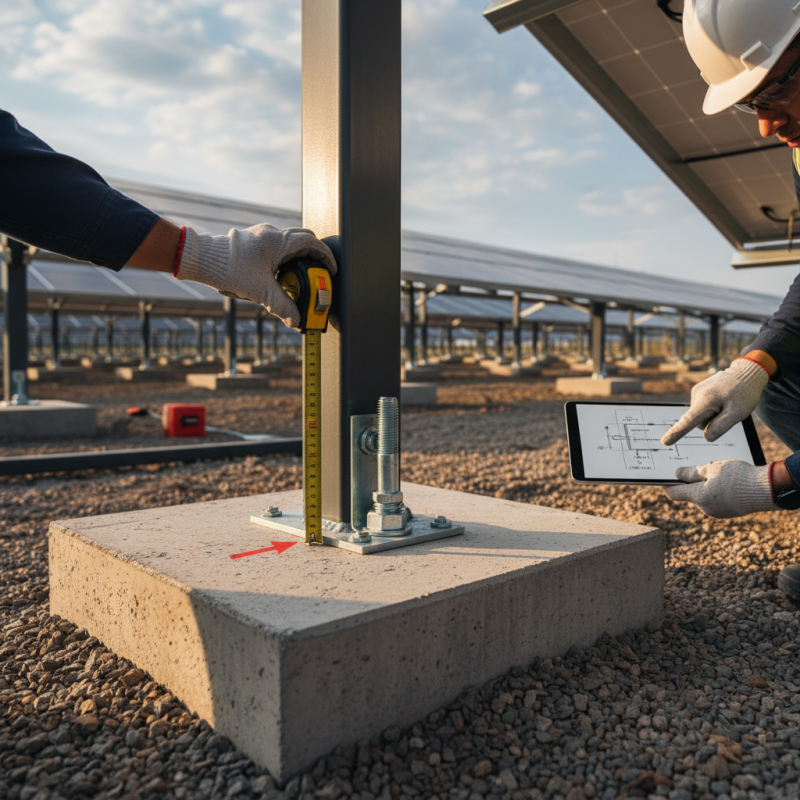
Determining load requirements for solar footings is crucial to ensure stability. Proper assessment starts with understanding the weight of the solar panels. This includes not only the panels themselves but also any additional equipment like inverters and batteries. The total weight will dictate the necessary strength of the expansion bolts used in the footings.
Next, consider environmental factors. Wind and snow loads vary by location, significantly influencing the required bolt length. A calculation should include these elements to avoid potential structural failures. If the loads are underestimated, risks can increase. It's essential to use reliable methods and calculations to support decisions on bolt sizes.
Choosing the right length of expansion bolt is often overlooked. Many assume standard lengths are sufficient. Inadequate or excessive lengths can lead to issues during installation or, worse, compromise safety. Always consult relevant guidelines or engineering resources to verify choices. Reflection on past projects can also guide future decisions. Proper planning pays off in the long run.
When choosing the right length of expansion bolts for solar footings, assessing soil conditions is crucial. Soil type affects the anchor's grip and stability directly. For instance, loose sandy soils typically require longer bolts due to reduced friction. In contrast, clayey soils might allow for shorter bolts, given their compact nature and cohesive properties.
According to a study by the American Society of Civil Engineers, 70% of structural weaknesses stem from inadequate anchoring methods related to soil assessments. Engineers recommend conducting soil tests to evaluate bearing capacity. This includes measuring soil density, moisture content, and compaction levels. A well-prepared site report aids in determining the necessary bolt embedment depth and length.
Soil conditions fluctuate widely across regions. Therefore, it's not unusual to face challenges in achieving optimal grounding for solar installations. While guidelines exist, many professionals still report difficulties tailoring bolt lengths to unique site conditions. Engaging with soil specialists can alleviate these concerns and enhance project safety. Adapting anchor lengths to specific environments can lead to more reliable and durable installations.
When selecting expansion bolts for solar footings, understanding standard lengths becomes essential. Typically, these bolts range from 3 to 12 inches, depending on the specific application. A standard 5-inch bolt is suitable for most installations. However, the specific requirements of your site can dictate a different length.
The surrounding soil condition is a key factor. For rocky terrain, longer bolts may be necessary. Conversely, softer soil might allow for shorter options. Regular assessments of soil type and stability can influence the choice made. Not every project will fit the standard lengths perfectly.
Adjustments based on local conditions are important.
Consideration of load requirements is crucial. The weight of the solar panels and accompanying hardware affects how deep the bolts need to anchor. A standard bolt may not provide enough grip in high wind areas.
Therefore, reviewing load specifications and local building codes is vital. Always verify that your chosen length meets both structural integrity and safety needs.
Determining the right length of expansion bolts for solar footings involves careful consideration of embedment depths. Various structural factors come into play. For example, the weight of the solar panels and the mounting system affects how deep the bolts need to go. Additionally, soil conditions play a crucial role. A loose or sandy soil may require a longer bolt to ensure that it can hold the structure securely.
Environmental factors also influence the embedment depth. Regions prone to high winds or seismic activity require more robust anchoring solutions. The potential for frost heave in colder climates is another consideration. Here, bolts may need to be embedded deeper than usual. It's essential to evaluate these factors to mitigate risks during installation.
Using improper lengths can lead to structural failures. Each project is unique, requiring calculations based on the site conditions. Take the time to measure and assess these conditions critically. Mistakes made early in the process can lead to costly repairs later. Always consult with structural engineers to validate your calculations. Their expertise ensures your solar installation stands the test of time.
When installing solar footings, proper bolt spacing ensures stability and longevity. Industry guidelines recommend specific maximum spacing to enhance performance and safety. Typically, bolts should not be spaced more than four feet apart. This distance helps in distributing loads evenly across the solar structure.
Adjustments may be necessary based on local soil conditions and environmental factors. For instance, sandy soils might require closer spacing compared to clay soils. It's essential to evaluate the specific site conditions to avoid potential installation issues. This ensures that the solar system can withstand strong winds or heavy snow loads without compromising stability.
Factors like installation methods and the type of solar structure can also affect bolt spacing. Professionals may sometimes overlook these details, which can lead to complications. Regular assessments when planning the layout can significantly improve the outcome. Understanding these nuances contributes to safer and more efficient solar installations.
: Expansion bolts typically range from 3 to 12 inches. A standard 5-inch bolt suffices for most installations.
Rocky terrain may need longer bolts, while softer soil might allow for shorter ones. Assessing soil is crucial.
The weight of solar panels impacts how deep bolts must anchor. This affects structural safety and stability.
High winds, seismic activity, and frost heave influence embedment depth. Robust anchoring may be necessary in these conditions.
Structural failures may occur. It's essential to choose the correct length to avoid costly repairs.
Take time to measure and assess site conditions carefully. Early mistakes can lead to major issues later.
Yes, consulting structural engineers helps validate calculations and ensures long-lasting installations.
Not every project fits standard lengths. Adjustments are often needed based on specific site requirements.
Verify that chosen lengths meet structural integrity and safety needs. This is essential to prevent future risks.
Regular assessments of soil type and stability are important for making informed decisions on bolt lengths.
When considering solar footings, determining the appropriate length of expansion bolt is critical to ensuring structural integrity. The first step is to assess the load requirements, as they will directly influence the bolt length needed for effective anchorage. Additionally, soil conditions play a significant role in this selection; different soil types can alter the necessary embedment depth of the bolts.
Standard lengths of expansion bolts are available for solar installations, but these may need adjustments based on specific site conditions. Calculating embedment depths must take into account structural loads and environmental factors, such as wind and seismic activity. Finally, adhering to industry guidelines for maximum bolt spacing is essential for maintaining stability and safety. In summary, the question "What length of expansion bolt do I need for solar footings?" can be answered by carefully evaluating these various factors to ensure a secure installation.

Trope Solar