When planning a solar installation, one critical aspect is understanding how to calculate the spacing between solar panel rows. Proper spacing ensures optimal energy production and efficiency. If panels are too close, shading occurs, reducing overall output. Conversely, excessively wide spacing can lead to wasted space and increased costs.
It's essential to consider several factors. The tilt angle of the panels and the geographical location significantly affect the ideal spacing. For example, areas with intense sunlight may require closer rows than those in milder climates. Weather patterns, seasonal changes, and local regulations also play a role. Each installation is unique, resulting in various challenges.
An effective layout not only maximizes sun exposure but also facilitates maintenance. This balance between performance and practicality is vital. As you delve into the specifics, reflect on how different scenarios might alter your calculations. In doing so, ask yourself: How to calculate the spacing between solar panel rows accurately? Understanding these dynamics will enhance your project and improve its long-term viability.
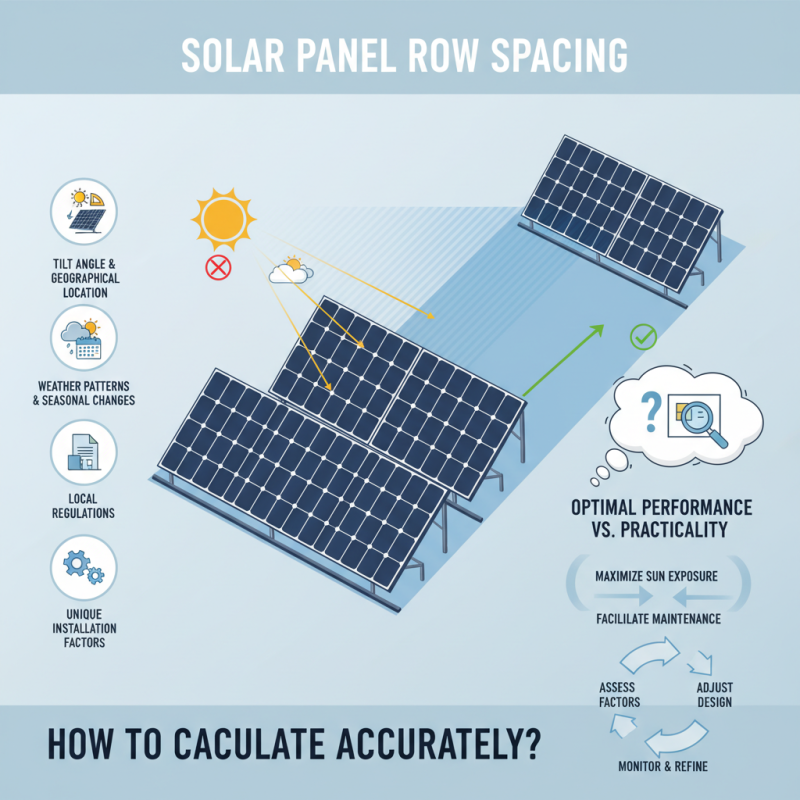
When calculating spacing between solar panel rows, various factors play a crucial role. The most significant is the tilt angle of the panels. A higher tilt enhances sunlight capture but requires more space. Conversely, a lower tilt might reduce spacing needs but can lead to shading issues. It's essential to consider local sunlight patterns, as they vary across regions.
Shading is another key factor. Taller structures or trees nearby may obstruct sunlight. This situation calls for more row spacing to avoid efficiency loss. Soil type, wind patterns, and even the type of solar panels used can influence optimal spacing. Each site's unique conditions warrant a tailored approach to maximize energy production.
Tips for efficient spacing:
- Conduct a site analysis. Assess any potential obstructions.
- Measure panel height and tilt. Calculate the height of shadows.
- Test different configurations. See what maximizes exposure while managing costs.
Adjusting row spacing can significantly enhance solar performance, but it requires careful evaluation and planning. Balancing efficiency and cost can be challenging. Always seek to refine your strategy as conditions evolve.
| Factors | Description | Recommended Spacing (ft) |
|---|---|---|
| Tilt Angle | The angle at which solar panels are installed affects shading and sunlight capture. | 6-10 |
| Height of Panels | The height of the solar panels above the ground influences shadow lengths. | 5-8 |
| Latitude | Geographical position impacts sunlight angles throughout the year. | 8-12 |
| Panel Size | The dimensions of each solar panel can change the necessary spacing. | 5-10 |
| Weather Conditions | Precipitation and wind can affect the space required for safe installation. | 6-10 |
: It maximizes energy production by preventing shading and ensuring sunlight reaches each panel.
Shading often happens in the early morning and late afternoon with low sun angles.
Adequate spacing allows for cooling breezes, enhancing efficiency, especially in hot climates.
It's a trial-and-error process that requires careful observation of sunlight patterns.
The sun's angle varies by season, affecting energy generation efficiency and shading risks.
Adjusting spacing to 10% of panel height can minimize shading and enhance performance.
It helps identify if adjustments are needed based on actual results versus expectations.
No, unique site factors affect performance, and adjustments may be necessary.
Adjust row spacing to accommodate significant shifts in the sun’s angle throughout the year.
Foliage or obstructions may impact shading, requiring regular reviews of the panel layout.
When considering how to calculate the spacing between solar panel rows, several crucial factors come into play, including the tilt angle of the panels, geographical location, and potential shading from nearby structures or trees. Optimal row spacing is essential for maximizing energy capture and overall system efficiency. Incorrect spacing can lead to inefficiencies and increased costs, making it vital to employ accurate calculation methods that account for the sun's seasonal angle variations.
Calculating the required spacing involves using formulas that incorporate these variables, yet many make common mistakes by neglecting certain elements like shadow length or underestimating seasonal changes. By adjusting the spacing based on seasonal sun angles, one can ensure that solar panels operate effectively year-round. Ultimately, a systematic approach to spacing calculations is critical for achieving optimal performance in solar energy systems.

 Trope Solar