China Best Solar Cable Management for Long Term Performance?

Time:2026-10-26 Author:Sophia
0%

Solar projects are built to produce power for decades, yet small cable problems can reduce that promise. Loose wires may touch sharp frames, collect water, or sag beneath modules. Sunlight, heat, wind, and repeated thermal movement slowly expose weak installation choices. This is why cable management deserves attention beyond appearance.

Why is cable management important for long-term solar performance? Proper routing protects insulation, supports stable electrical output, and simplifies inspections. Experienced installers use UV-resistant clips, stainless steel fasteners, and suitable cable ties. They keep connectors away from standing water and avoid placing cables directly on the roof surface. A clean cable path also reduces shading risks and helps technicians locate faults faster.

Details matter. Cables should follow the frame without tight bends or excessive tension. Drainage points need clear access after rain. Different roof materials may require different mounting methods. Local climate data should guide material selection, especially in coastal, snowy, or high-temperature regions. Industry standards and manufacturer instructions remain important references.

Still, no management system is perfect. A carefully clipped cable can loosen after years of vibration. A product described as durable may perform poorly in an unfamiliar climate. That possibility deserves honest review. Regular visual checks, thermal inspections, and documented maintenance can reveal problems before they become expensive failures. The best solar cable management is not simply neat installation. It is a practical, verifiable system designed for safety, serviceability, and long-term energy performance. Small improvements today may prevent major rewiring tomorrow.
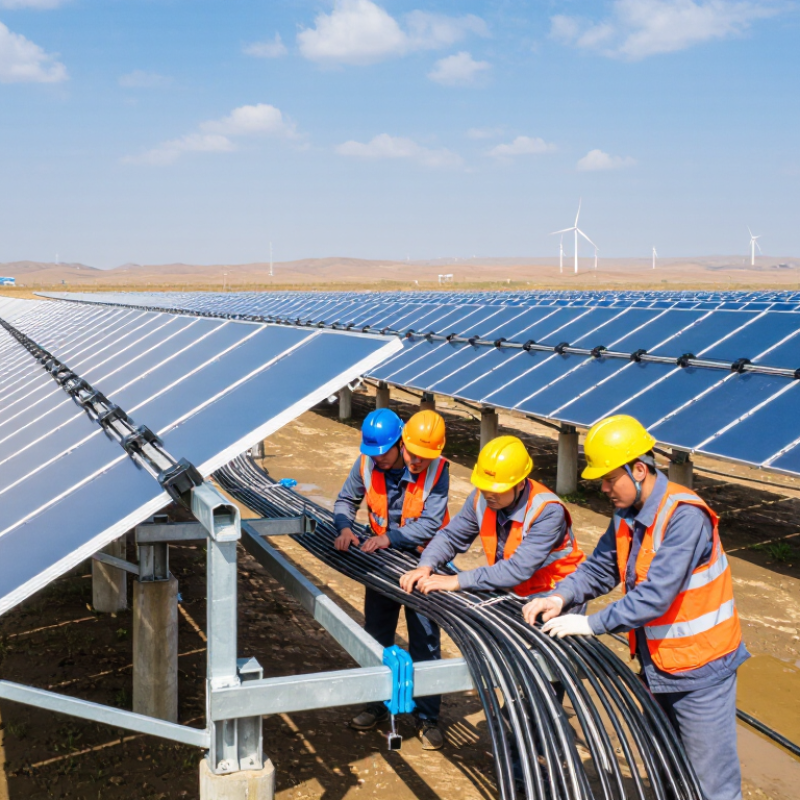
China Best Solar Cable Management for Long Term Performance?

Types of Solar Cable Management Systems in China

Types of Solar Cable Management Systems in China

Solar cable management in China varies by project structure, climate, and maintenance access. Rooftop systems often use UV-resistant cable clips fixed beneath module frames. These clips keep cables away from sharp edges and hot roof surfaces. Rail-mounted clips suit aluminum support structures and allow neat routing along module rows. For larger ground-mounted arrays, stainless steel cable trays provide stronger protection against wind, animals, and accidental contact.

Conduit systems are common where cables cross walkways or exposed steel sections. Flexible conduit helps around moving joints, but excessive bending can create hidden stress. Some utility-scale projects use perforated trays with drainage holes. Floating solar installations need corrosion-resistant fasteners and carefully sealed connection points. In practice, many failures begin with small details, such as loose clips or cables resting in pooled water. I have found that tidy installation does not always mean durable installation.

Tips: Leave a gentle service loop near connectors. Keep cables separated from drainage paths. Check clip spacing after strong winds. Use compatible materials to reduce galvanic corrosion. Inspect shaded sections closely; they often hide moisture and abrasion. Installation teams should record cable routes with clear photographs. This simple habit supports faster maintenance, although records are sometimes incomplete. Reserve space for thermal movement, especially on long metal rails. A design may look efficient today, yet become difficult to repair after years of heat, dust, and repeated weather exposure.

Key Materials for Long-Term Solar Cable Protection

Long-term solar cable protection begins with the right materials, not attractive installation alone. Copper conductors provide stable current flow, while tinned copper resists oxidation in humid or coastal environments. Cross-linked polyethylene insulation handles heat, sunlight, and mechanical stress better than many general-purpose plastics. Cables should also meet photovoltaic standards such as EN 50618 or IEC 62930.

NREL’s widely cited photovoltaic degradation review reports a median module degradation rate near 0.5% annually. Cable failure can accelerate system losses, even when panels remain healthy. In field inspections, cracked insulation often appears near connectors, roof edges, and poorly supported bends. UV resistance matters there. So does abrasion resistance. I have seen tidy cable runs fail because water remained trapped beneath clips. Materials help, but routing still decides performance.

Tips: Select halogen-free, UV-resistant cable jackets with verified temperature ratings. Use corrosion-resistant clips and avoid sharp bends. Keep cables off the roof surface where possible. Check connector sealing after thermal cycles and heavy rain. Do not assume thicker insulation solves every problem. It can increase stiffness and stress. IEC testing provides confidence, but site conditions remain imperfect. Salt, heat, rodents, and careless maintenance still need practical inspection records.

Key Materials for Long-Term Solar Cable Protection

Typical continuous temperature ratings show why UV-stabilized polymers and metals are selected for demanding photovoltaic cable-management systems. Higher ratings generally provide greater thermal margin, but UV exposure, mechanical load, moisture, chemical resistance, and installation quality must also be evaluated.

Representative nominal values for commonly used material families. Actual limits vary by formulation, product design, installation method, and manufacturer datasheet.

How to Select Reliable Chinese Solar Cable Management Suppliers

China Best Solar Cable Management for Long Term Performance?

When selecting Chinese solar cable management suppliers, inspect more than product photos. Ask about material grades, UV resistance, temperature limits, and load performance. A reliable supplier should provide clear test reports and traceable batch records. Products may include clips, conduits, ties, and rooftop cable trays.

I have found that factory experience matters during sample evaluation. Check whether clips remain firm after repeated fitting and removal. Examine sharp edges, weak locking points, and uneven molding. Request samples from normal production, not only polished showroom pieces. Verify quality controls through factory audits, process records, and independent testing where appropriate. Standards such as IEC requirements can guide technical discussions.

Communication also reveals supplier reliability. Technical teams should answer questions with measurements, tolerances, and practical installation guidance. Confirm packaging, replacement procedures, lead times, and inspection responsibilities in writing. A low quotation can hide thinner material or inconsistent dimensions. I once focused too heavily on price and overlooked installation labor. That mistake changed my evaluation method. Still, audits are not perfect. A good report cannot replace field testing on hot, windy rooftops. Choose suppliers willing to improve designs after real installation feedback.

Installation Standards for Safe and Durable Cable Routing

China Best Solar Cable Management for Long Term Performance?

Installation Standards for Safe and Durable Cable Routing

Safe solar cable routing begins with the installation standard, not with the cable tie. Follow applicable electrical codes, project drawings, and manufacturer instructions. In many projects, IEC 62548 and local requirements guide photovoltaic array design and wiring practices. Requirements may differ by region. Verify them before work starts.

Keep positive and negative conductors organized, supported, and protected from sharp edges. Use UV-resistant clips or approved cable supports, rather than ordinary plastic ties. Maintain separation from hot surfaces, moving parts, and drainage paths. Cables should not rest on roof panels or hang below the mounting structure. Leave enough slack for thermal movement, but avoid loose loops that collect water.

Small details matter.

Inspect connectors for full engagement and correct polarity. Route cables away from standing water, bird activity, and areas where maintenance workers may step. Do not bundle more conductors than the support system allows, because heat can build inside dense groups. During field inspections, poorly placed clips often cause insulation wear after years of wind movement. That problem is easy to miss during commissioning.

A final inspection should record cable routes, support spacing, connector conditions, and damaged insulation. Photographs help future technicians understand hidden routing. Even experienced installers can overlook one exposed section. That is why a second inspection remains valuable, especially before energizing the system.

China Best Solar Cable Management for Long Term Performance? - Installation Standards for Safe and Durable Cable Routing

Cable Management Area Installation Requirement Recommended Benchmark or Data Safety and Durability Check Relevant Reference
Cable Type and Rating Use photovoltaic cable designed for outdoor DC service, with insulation suitable for the system voltage and environmental conditions. Common utility and commercial PV systems use cables rated up to 1,500 V DC. The conductor size must be selected for current, voltage drop, installation method, and ambient temperature. Confirm voltage, current, temperature, sunlight exposure, and cable certification before installation. IEC 62930; EN 50618; IEC 60364-5-52
UV and Weather Exposure Route cables so that insulation is protected from prolonged ultraviolet radiation, standing water, abrasion, and excessive heat. Use UV-resistant PV cable and outdoor-rated clips, conduit, or cable tray. Do not leave cable insulation in continuous contact with hot roof surfaces where avoidable. Inspect for discoloration, cracking, hardening, and loss of flexibility during scheduled maintenance. IEC 62548; IEC 60364-5-52
Cable Support Spacing Support cables continuously enough to prevent sagging, wind movement, connector loading, and contact with sharp or hot surfaces. A practical project benchmark is approximately 300–600 mm between supports for exposed PV cable runs. Reduce spacing where wind, vibration, vertical routing, or heavy cable bundles require it. Check that cable weight is carried by the support system rather than by connectors or equipment terminals. IEC 62548; local electrical and structural requirements
Bend Radius Avoid tight bends, kinks, twisting, and repeated flexing near connectors and junction boxes. Follow the cable manufacturer’s minimum bend radius. A commonly used fixed-installation benchmark is at least 4 times the cable outside diameter, unless the cable datasheet specifies a larger value. Measure the bend at the smallest radius and verify that insulation is not flattened or visibly stressed. Cable datasheet; IEC 60364-5-52
Connector Positioning Keep connectors off the roof surface and away from locations where water can collect. Use compatible, fully engaged connectors with the correct polarity. Avoid unsupported connector pairs hanging from cable ends. Check locking, polarity, sealing, and connector compatibility. Never mix connector types unless compatibility has been specifically validated. IEC 62548; IEC 62446-1
Roof Penetrations Protect cables passing through roofs, walls, or metalwork with suitable glands, bushings, conduit, and weather sealing. The opening should not expose the cable to sharp edges, compression, water ingress, or excessive movement. Use a dedicated cable entry detail for each roof system. Perform a visual inspection and water-sealing check after installation and after major roof maintenance. IEC 60364-5-52; local building and roofing requirements
Cable Tray and Conduit Fill Use appropriately sized, corrosion-resistant cable trays or conduits where cables require mechanical protection. Do not overcrowd the enclosure. Maintain sufficient free space for heat dissipation, installation, inspection, and future maintenance according to the applicable electrical code. Check drainage, cover security, corrosion protection, and support capacity, especially in coastal or industrial environments. IEC 60364-5-52; local electrical code
Separation and Routing Route positive and negative conductors together where practical and keep DC, AC, communication, and lightning-protection conductors appropriately separated. Avoid unnecessary conductor loops, large parallel loops, and routing near sharp metal edges or high-heat equipment. Verify routing against the electrical design, electromagnetic compatibility requirements, and lightning-protection plan. IEC 62548; IEC 60364-4-44
Fasteners and Cable Clips Use UV-stable, corrosion-resistant fasteners designed for the module frame, mounting system, or cable tray. Fasteners must not pierce, crush, or cut the cable insulation. Avoid unsupported plastic ties that can become brittle under outdoor exposure. Check for sharp edges, loose hardware, galvanic corrosion, and movement caused by thermal expansion or wind. IEC 62548; installation-system instructions
Terminations and Torque Terminate conductors using approved terminals, crimp tools, glands, and torque values for the specific equipment. Use calibrated tools and apply the torque specified by the equipment or terminal manufacturer. Do not rely on visual tightness alone. Record torque checks where required and inspect for loose strands, damaged crimps, overheating, and discoloration. IEC 62446-1; equipment installation instructions
Testing and Commissioning Test the completed PV array before energization and document the results. Typical verification includes polarity, continuity of protective conductors where applicable, insulation resistance, open-circuit voltage, operating current, and functional checks. Compare results with design values and investigate abnormal readings before connecting the system to the grid. IEC 62446-1; local commissioning requirements
Inspection and Maintenance Include cable routing in the planned PV inspection program. Inspect at least annually, and more frequently in environments with strong wind, salt spray, heavy snow, rodents, or high temperature variation. Look for sagging cables, failed clips, connector separation, insulation damage, corrosion, water ingress, and hot spots identified by thermal inspection. IEC 62446-1; site maintenance plan

Note: Dimensions and spacing shown as benchmarks are project-design guidance rather than universal code limits. Always verify the latest edition of the applicable national electrical code, structural requirements, cable datasheets, and equipment installation instructions.

Maintenance Practices for Sustained Solar Cable Performance

Long-term solar cable performance depends on routine maintenance, not installation quality alone. Inspect exposed cable routes every six to twelve months. Look for cracked insulation, loose clips, abrasion, water marks, and sharp bending near connectors. A cable touching a metal roof can develop wear slowly. The damage may stay invisible until a fault appears.

The NREL Compendium of Photovoltaic Degradation Rates reports a median module degradation rate of about 0.5% per year. Cables are not modules, but the figure shows why small losses deserve attention. Measure insulation resistance during scheduled electrical testing, following IEC 62446-1 procedures. Check connector temperatures with an infrared camera under load. Hot spots often indicate loose connections, contamination, or mismatched components. Record readings over time. One inspection proves little.

Cleaning should avoid pulling or twisting the cable. Replace damaged clips with UV-resistant supports, and keep conductors away from standing water. Thermal cycling also matters. Daily temperature changes expand and contract cable materials repeatedly. The IEA PVPS Task 13 reliability reports identify moisture, heat, and mechanical stress as recurring photovoltaic failure influences. Do not rely only on visual checks. We still miss hidden damage. Maintenance records should include weather exposure, test values, repair locations, and photographs. A perfect checklist does not exist, so technicians should review unusual findings instead of closing the work order automatically.

FAQS

What cable management systems suit rooftop solar installations?

UV-resistant clips can hold cables beneath module frames. They keep wires away from sharp edges and hot roof surfaces. Rail-mounted clips work well along aluminum support rows. Neat routing helps, but it does not guarantee long-term durability.

When are stainless steel cable trays useful?

Stainless steel trays suit large ground-mounted arrays. They provide stronger protection against wind, animals, and accidental contact. Choose trays with suitable drainage features. Heavy protection may still complicate repairs.

Why are conduits used in solar cable systems?

Conduits protect cables crossing walkways or exposed steel sections. Flexible conduit helps around moving joints. Excessive bending creates hidden stress. That detail is easy to miss.

What special requirements apply to floating solar installations?

Floating systems need corrosion-resistant fasteners and carefully sealed connection points. Water exposure can worsen material damage and connection problems. Inspect low areas for trapped moisture. Sealing alone is not enough.

How should cables be routed for easier maintenance?

Leave a gentle service loop near each connector. Keep cables away from drainage paths and pooled water. Reserve space for thermal movement on long metal rails. Take clear route photographs during installation.

How can a supplier’s cable products be evaluated?

Ask for material grades, UV resistance, temperature limits, and load performance. Request samples from normal production, not only polished display samples. Check locking points, molding quality, and sharp edges. Small defects matter.

What quality records should a reliable supplier provide?

Request clear test reports and traceable batch records. Confirm packaging, replacement procedures, lead times, and inspection duties in writing. Factory audits can reveal process weaknesses. They cannot replace field testing.

Is the lowest quotation usually the best choice?

Not necessarily. A low price may reflect thinner material or inconsistent dimensions. Include installation labor in the comparison. I once focused too heavily on price. That judgment needed correction.

How can cable management systems be checked after installation?

Inspect clips after strong winds and examine shaded sections closely. Look for moisture, abrasion, loose fittings, and cables touching hot surfaces. Review route photographs during maintenance. Records may be incomplete. Keep improving them.

Conclusion

Choosing the best solar cable management system in China is essential for achieving safe, reliable, and long-term photovoltaic performance. Common solutions include cable clips, conduits, cable trays, protective sleeves, and structured routing systems designed for rooftop, ground-mounted, and utility-scale installations. Durable materials such as UV-resistant polymers, stainless steel, and corrosion-resistant metals help protect cables from sunlight, moisture, heat, vibration, and mechanical damage. When selecting a supplier, buyers should evaluate material quality, manufacturing consistency, technical support, customization capability, and experience with demanding outdoor environments.

Why is cable management important for long-term solar performance? Proper cable routing prevents sagging, abrasion, connector stress, overheating, and water exposure, all of which can reduce system efficiency and increase maintenance risks. Installation should follow recognized electrical and safety practices, including secure spacing, suitable bending radii, organized separation, and reliable fastening. Regular inspections should check for loose fittings, damaged insulation, corrosion, excessive tension, and debris buildup. With suitable products, careful installation, and scheduled maintenance, solar cable systems can deliver stable protection and dependable performance throughout their service life.

Sophia

Sophia

Sophia is a dedicated marketing professional with an exceptional depth of knowledge about her company's products and services. With a keen understanding of market trends and customer needs, she crafts insightful blog posts that not only inform but also engage readers, enriching the company’s online......